
Transformers Studio Series Thundercracker Review
The memory: a sleek blue jet screaming across the sky, leaving a trail of thunderous booms that rattle windows for miles. That’s Thundercracker in a nutshell—a Decepticon who embodies aerial superiority with a side of reluctant villainy. Now, Hasbro’s Studio Series line brings this iconic seeker back to life in Voyager Class form, drawing straight from the 1986 animated movie. This isn’t just another toy; it’s a nostalgia-fueled machine that transforms from robot to fighter jet, capturing the essence of a character who’s been zipping through Transformers lore for decades.
In this deep dive, we’ll unpack the figure itself, exploring its design, features, and playability. Then, we’ll jet into the backstory of the Generation 1 (G1) Thundercracker, tracing his origins, his pivotal role in the Transformers universe, and that unforgettable moment in the 1986 film where everything changed. We’ll also touch on how he’s been referenced in the series that followed, keeping his legacy alive even after his on-screen overhaul. Whether you’re a collector eyeing your next shelf addition or a fan reminiscing about Saturday morning cartoons, buckle up—this ride covers all the angles.
Unboxing the Voyager: Packaging and First Impressions
Let’s start where every collector does: the box. The Studio Series packaging is a love letter to the movie era, with vibrant artwork showing Thundercracker in his jet mode streaking through space, lasers blazing. The window display lets you peek at the figure in robot mode, teasing the blue-and-silver color scheme that’s instantly recognizable. Flip it over, and you’ll find bio details nodding to his movie appearance, complete with transformation steps and accessory callouts.
Popping it open, the figure comes secured in a plastic tray, with the two arm blasters tucked nearby. No unnecessary frills here—just the essentials for a clean unboxing experience. The plastic feels sturdy, and there’s that satisfying “new toy” smell that transports you back to the toy aisles of yesteryear.
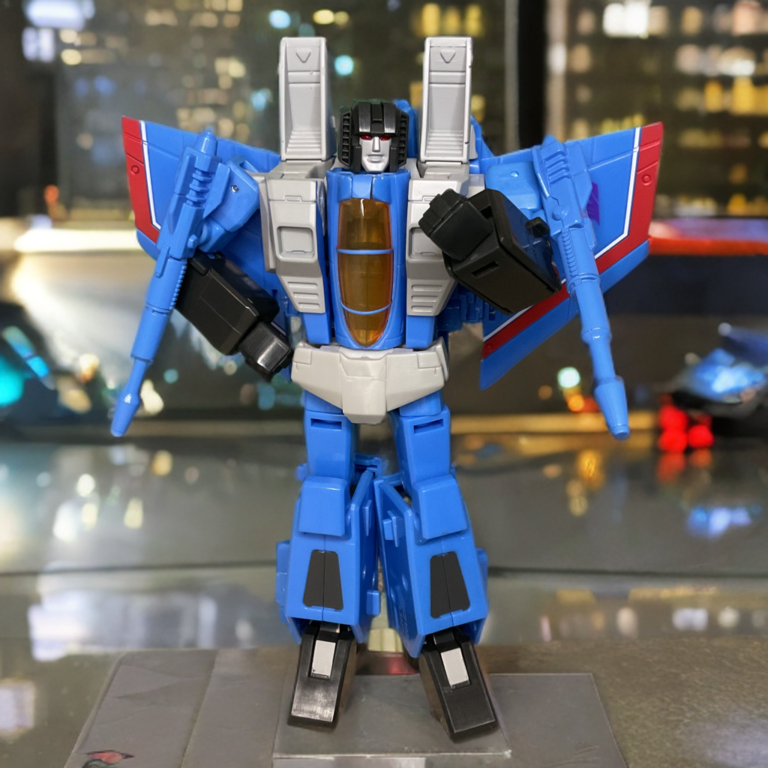
At 6.5 inches tall in robot mode, this Voyager Class piece strikes a balance between size and detail, making it display-friendly without dominating your desk. First impressions? It’s a solid entry that promises more than meets the eye.
Robot Mode: A Decepticon with Attitude
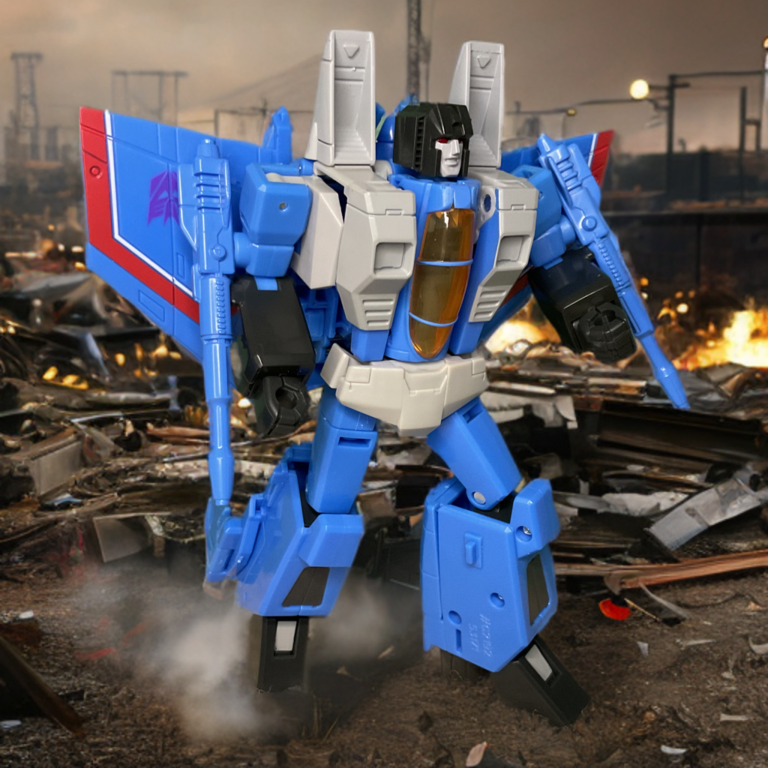
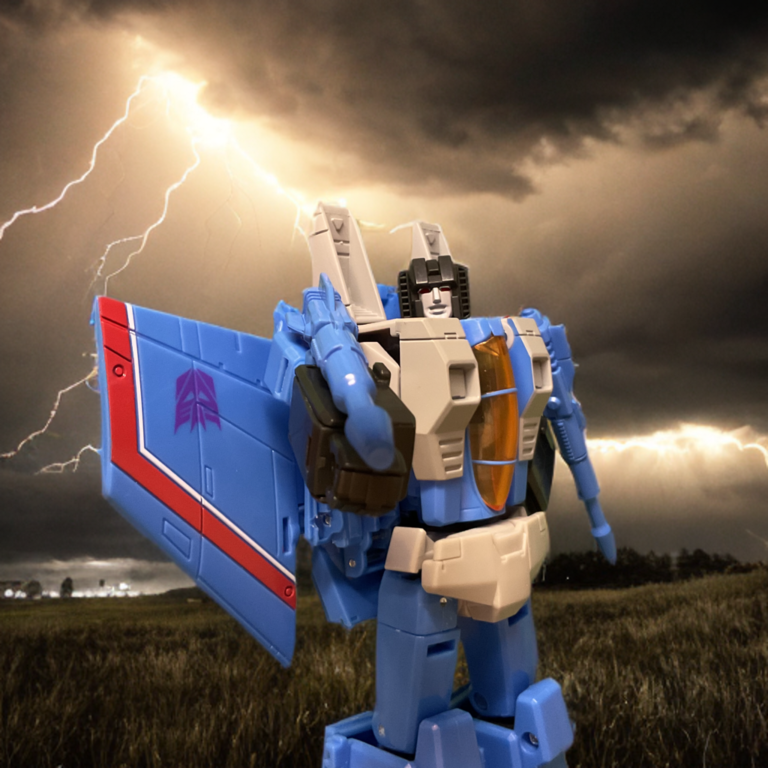
Stand Thundercracker upright, and you’re greeted by a robot that’s all sharp angles and menacing flair. The blue torso pops against silver accents, with red highlights on the chest vents and cockpit canopy adding that classic seeker vibe. His head sculpt is spot-on, featuring a smirking faceplate, yellow visor eyes, and those signature wing kibble forming a backpack that screams “I’m built for speed.”
Proportion-wise, he’s got long legs for dynamic poses and broad shoulders that give him a commanding presence. The paint apps are crisp—metallic silver on the thighs and arms, with subtle weathering to evoke battle-worn grit from the movie. It’s not overdone; just enough to make him look like he’s fresh from dodging Autobot fire. In hand, the plastic quality shines through: no hollow spots that plague cheaper figures, and the joints click satisfyingly into place.
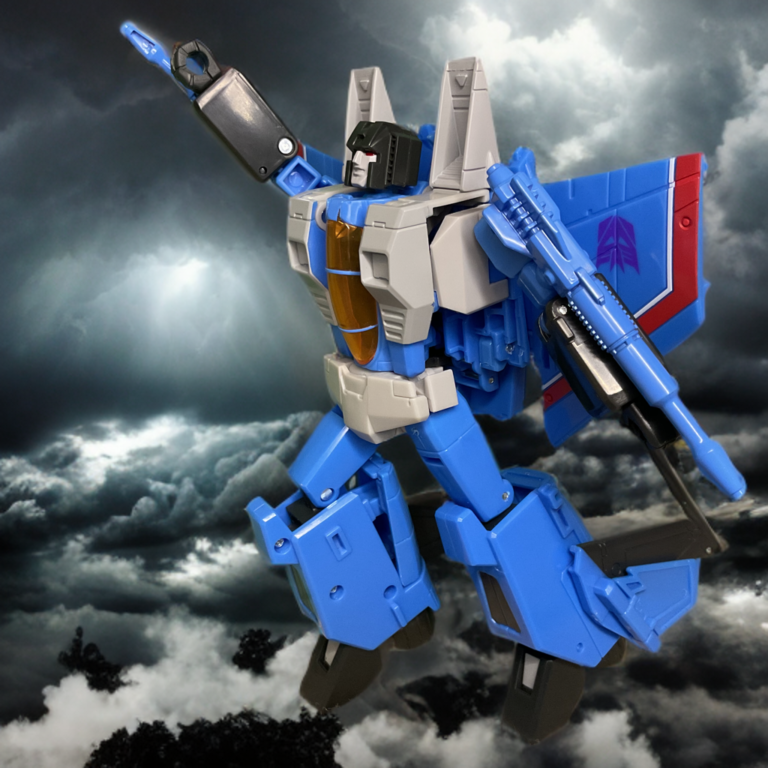
One standout is the way the jet mode elements integrate. The wings fold neatly behind him, and the tail fins double as heel spurs for stability. He’s got that arrogant stance down pat, like he’s looking down on ground-bound bots with disdain. If you’re posing him with other seekers like Starscream or Skywarp, he fits right in, completing the trio that’s terrorized Cybertron for eons.
Jet Mode: Mach 6 Menace
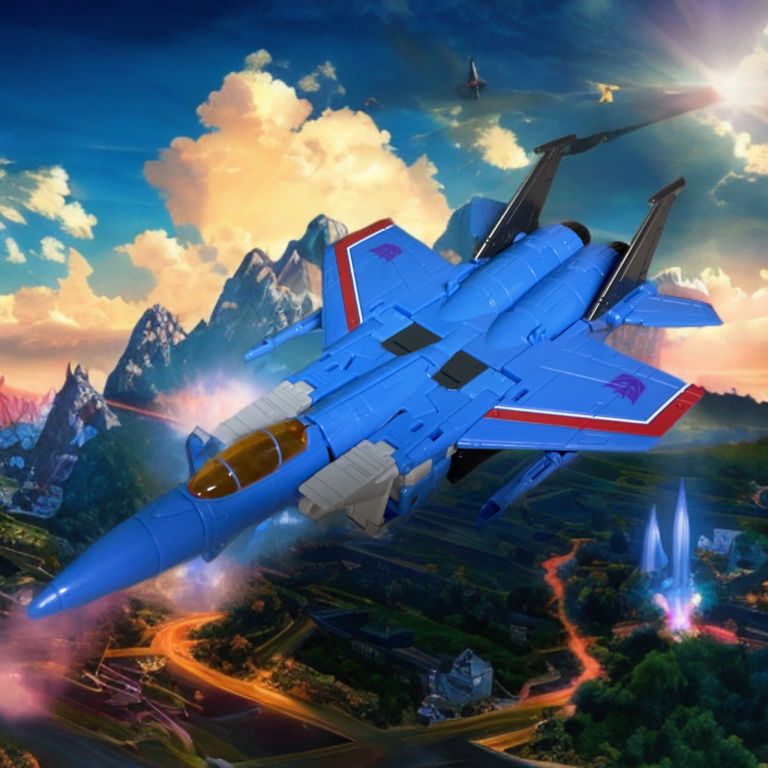
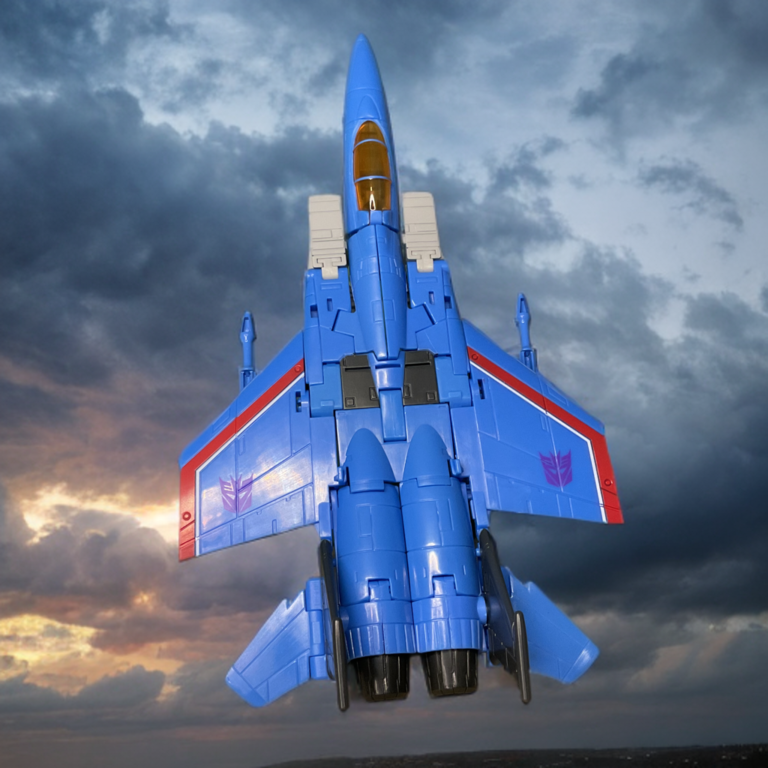
Flip the script to jet mode, and Thundercracker becomes a sleek F-15 Eagle homage, all aerodynamic lines and no-nonsense aggression. The transformation locks everything into a compact fighter that’s 9 inches long with a 6-inch wingspan—perfect for swooshing around your living room while humming the movie soundtrack.
The blue fuselage dominates, accented by silver intakes and red stripes that scream Decepticon air superiority. Undercarriage details include folded robot limbs that blend seamlessly, avoiding the “robot hanging underneath” look of older molds. The cockpit opens up, a nod to the movie designs, and the landing gear deploys for display options—though it’s more fun imagining him barreling through the atmosphere at 1500 mph.
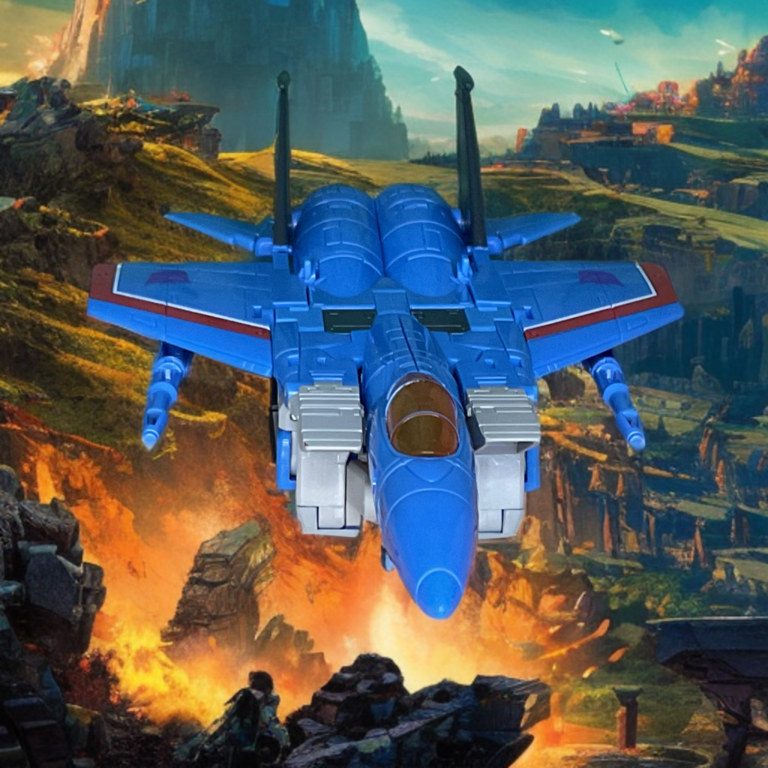
Compared to earlier Earthrise versions, this Studio Series take refines the engineering. Limbs tuck away more elegantly, drawing inspiration from Masterpiece figures but at a mainline price point. It’s not just a toy; it’s a scale model that captures the thrill of Thundercracker’s aerial dominance. Park him next to other jets in your collection, and he steals the show with his movie-accurate deco.
Transformation: 27 Steps to Glory
Ah, the heart of any Transformers figure—the change from bot to vehicle. This one clocks in at 27 steps, which sounds daunting but flows like a well-oiled machine. Start by collapsing the legs into the rear fuselage, swing the arms up to form the wings, and fold the torso down to lock the nose cone in place. It’s intuitive once you get the hang of it, with tabs and slots that guide you along.
What sets this apart from previous seeker molds? The process mirrors the MP-52 Starscream’s smoothness but simplifies it for broader appeal. No frustrating misalignments here; everything clicks with purpose. Reverse the steps for jet-to-robot, and you’ll appreciate how the wings unfurl dramatically, like Thundercracker shaking off his disguise.
For kids (or clumsy adults), it’s forgiving—joints are tight but not stubborn. Seasoned collectors will dig the engineering nods to the ’86 film animation, where seekers transformed mid-flight with flair. It’s not the quickest change, but the satisfaction of nailing it makes up for the extra time. Pro tip: Practice a few times to avoid scratching those pristine paint apps.
Accessories and Play Features
Thundercracker doesn’t come overloaded, but what he has packs a punch. The two arm blasters attach securely in both modes—in robot form as forearm cannons, in jet mode as underwing weapons. They’re molded in gray plastic with red accents, evoking the incendiary guns from his tech specs.
These aren’t just peg-ins; they enhance poses, letting you recreate movie scenes where he’s unleashing drone rockets on unsuspecting Autobots. No blast effects included, but they’re compatible with other Studio Series add-ons if you want to amp up the firepower.
Playability shines through articulation: head swivels 360 degrees, shoulders rotate with butterfly joints for wide swings, elbows bend deeply, and hips allow for high kicks. Ankles pivot for grounded stability, and the waist twist adds expressiveness. It’s poseable enough for epic dioramas, whether he’s leading a seeker assault or standing sentinel on your shelf.
Comparisons to Other Seekers
In the seeker family, Thundercracker often plays third fiddle to Starscream’s scheming and Skywarp’s teleporting tricks. But this figure holds its own against siblings like the Studio Series Starscream or Earthrise Skywarp. The mold improvements—smoother transformation, better proportions—make it a step up from older Voyagers.
Color-wise, his blue hue stands out, avoiding the “all look the same” trap of repaints. If you have the Gamer Edition Thundercracker, note the differences: this movie version has unique tail fins that stay closed in hover mode, adding variety. It’s not revolutionary, but it refines the formula, making it a must-have for completing your Decepticon air force.
Value and Collectibility
At Voyager Class pricing, this Thundercracker delivers bang for your buck. Detailed sculpting, solid build, and movie ties justify the cost—especially compared to pricier Masterpiece options. Collectors will appreciate the screen accuracy, from the deco to the scale, making it a cornerstone for ’86 movie displays.
Downsides? Minor gripes like visible seams in jet mode or the lack of extra effects, but nothing deal-breaking. It’s durable for play, yet elegant for shelves. If you’re hunting variants, keep an eye on exclusives, but this standard release nails the essentials.
From Cybertron to Earth: The G1 Thundercracker Biography
Shifting gears from plastic to lore, let’s explore the character behind the toy. Thundercracker emerged in the original Generation 1 lineup as one of Megatron’s elite warriors, a Decepticon seeker who transformed into a jet fighter. His function? Warrior, with a motto that captured his essence: “The deadliest weapon is terror.”
Born on Cybertron amid the escalating war between Autobots and Decepticons, Thundercracker joined Megatron’s forces early on. He was part of the boarding party that attacked the Autobot Ark, leading to a crash on Earth where both sides slumbered for four million years. Upon awakening in 1984, he scanned an Earth jet form, allowing him to patrol the skies at speeds up to 1500 mph.
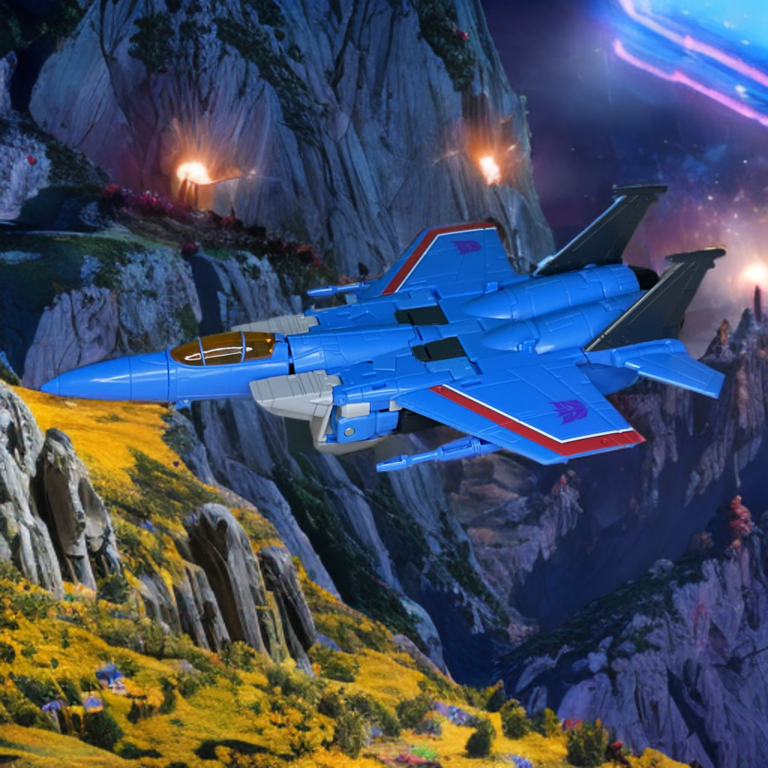
What set Thundercracker apart? His contempt for anything ground-bound—he viewed non-flyers as inferior. Yet, unlike his zealous comrades, he harbored doubts about the Decepticon cause. This internal conflict made him a reluctant fighter, persuaded to battle more out of fear than conviction. His arsenal included sonic booms audible for 200 miles, drone rockets, and incendiary guns, making him a formidable aerial threat.
Throughout the G1 cartoon, Thundercracker was a constant presence, often flanking Starscream and Skywarp in seeker formations. He participated in raids for energon, clashed with Autobots like the Aerialbots, and even faced off against Guardian robots in Cybertron’s ancient days. Episodes highlighted his teamwork, like in “More Than Meets the Eye,” where he helped plunder Earth’s resources, or “War Dawn,” flashing back to his pre-Earth exploits.
His personality shone in subtle ways: a warrior’s bravado masking uncertainty. Tech specs rated him high in speed and firepower but noted his impeded effectiveness due to those doubts. He wasn’t the schemer like Starscream or the prankster like Skywarp; Thundercracker was the straight shooter, literally and figuratively.
In comics, his story paralleled the cartoon but with twists. Marvel’s run saw him revived from stasis, battling alongside Megatron until a fateful encounter with Omega Supreme left him scrapped. Regeneration One explored alternate paths, but his core remained: a flyer torn between loyalty and conscience.
Thundercracker’s design influenced countless seekers, with his blue palette becoming synonymous with aerial Decepticon might. Toys from 1984 onward captured this, evolving from simple bricks to articulated masterpieces.
The Decepticon Seeker Trio—Starscream, Thundercracker, and Skywarp—has long been a fan-favorite unit in Transformers lore, and their modern Voyager Class figures in the Studio Series line (particularly the movie-inspired or G1-adjacent releases) let collectors display them side-by-side with impressive screen accuracy and engineering.
Below is a detailed comparison chart focusing on the most relevant recent Voyager Class versions that represent the classic trio. This draws from the 1986 movie aesthetic where possible, emphasizing the Studio Series 86 Voyager Thundercracker (the new mold debut), alongside comparable Starscream and Skywarp releases. Note that Skywarp has not yet received a direct Studio Series 86 movie Voyager equivalent as of early 2026 (he’s more commonly seen in Gamer Edition/War for Cybertron lines or older molds), so the comparison uses the closest analogous figures for fairness:
- Starscream: Studio Series 86 Voyager Class (or the closely related new-seeker mold family)
- Thundercracker: Studio Series 86 Voyager Class (SS-??, the figure from your prior review)
- Skywarp: Studio Series Gamer Edition Voyager (War for Cybertron-inspired, as it’s the most recent prominent Voyager seeker in black/purple deco sharing seeker family traits)
| Category | Starscream (Studio Series 86 Voyager / Equivalent New Mold) | Thundercracker (Studio Series 86 Voyager) | Skywarp (Studio Series Gamer Edition Voyager / Comparable) |
|---|---|---|---|
| Release Context | Often the lead/flagship seeker; multiple movie or ’86 variants exist. Newer molds prioritize his scheming leader look. | Debut of a refined seeker mold for ’86 movie accuracy; first use highlights his blue classic deco. | Gamer Edition (WFC-inspired); black/purple scheme stands out as the “cool” variant in trio displays. |
| Height (Robot Mode) | ~6.5 inches (16.5 cm) | 6.5 inches (16.5 cm) | ~6.5–7 inches (similar Voyager scaling) |
| Alt Mode | F-15 Eagle-inspired fighter jet; sleek, aggressive lines | F-15 Eagle homage; blue fuselage with silver/red accents | F-15 Eagle base; black dominant with purple highlights |
| Transformation Steps | ~25–30 steps (smooth, intuitive tabs/slots) | 27 steps (flows naturally, refined engineering) | Similar ~25–30 steps (shares family engineering traits) |
| Robot Mode Sculpt | Sharp angles, smirking/angry face, prominent wings as backpack | Smirking faceplate, yellow visor eyes, battle-worn weathering | Often “shouty” or aggressive face; different rudder/tailfin positioning |
| Head Sculpt Differences | Classic pointed “helmet” with red Null Ray eyes | Neutral/smirk expression; more eyes/unique detailing | Shouty/aggressive face; distinct from Starscream’s sneer |
| Color Scheme | Grey/silver with red, blue, yellow accents | Glossy blue dominant, silver, red stripes, black details | Black primary, purple accents; visually pops in group shots |
| Paint Apps & Deco | Crisp metallic finishes, movie weathering | Excellent metallic silver thighs/arms, subtle battle wear | High-contrast black/purple; less weathering, more bold |
| Tailfin/Rudder Mechanics | Splayed open for hover mode, close for boost | Stay closed in hover, splay open for boost (unique to mold variant) | Similar to Starscream (splayed hover, closed boost) |
| Accessories | Arm blasters/null rays (attach in both modes) | 2 arm blaster accessories (forearm cannons/underwing) | Similar blasters; minor cosmetic differences in some releases |
| Articulation Highlights | Ball-jointed head, butterfly shoulders, deep elbows, waist twist, ankle pivots | 360° head swivel, butterfly shoulders, high hip kicks, stable ankles | Comparable high poseability; dynamic for aerial attack poses |
| Jet Mode Integration | Clean tuck-away limbs, no “hanging robot” look | Seamless undercarriage, opens cockpit, deployable gear | Excellent blending; black scheme hides seams well |
| Strengths in Trio Display | Leader presence; most iconic deco | Adds vibrant blue color variety; refined proportions | “Cool factor” with dark scheme; completes visual balance |
| Common Criticisms | Can feel like the “default” repaint base | Sells slower than Starscream/Skywarp due to less “flash” | Mold-specific quirks (e.g., face/head differences) |
| Best For | Completing the command structure; shelf centerpiece | Movie-accurate ’86 display; balanced engineering | Dark contrast; fan-favorite “edgy” addition |
Key Takeaways from the Trio
- Mold Family & Engineering — The newer Studio Series seeker molds (as debuted with Thundercracker) represent a step forward in smoothness and proportion compared to older Earthrise/Siege Voyagers. Tailfin mechanics vary slightly across the trio for character distinction—Thundercracker’s unique hover/boost setup is a nice touch.
- Visual Harmony — When displayed together, the blue (Thundercracker), grey/red (Starscream), and black/purple (Skywarp) create perfect contrast. Starscream often leads due to popularity, but Thundercracker’s deco feels fresh and less common.
- Collectibility — Starscream variants tend to be easiest to find; Thundercracker adds uniqueness without being a straight repaint; Skywarp’s darker palette makes any trio photo pop.
A Fatal Flight: Thundercracker’s Fate in the 1986 Movie
The 1986 film “The Transformers: The Movie” marked a turning point for many characters, and Thundercracker’s arc was no exception. Set in 2005, the story escalated the war, with Decepticons launching a brutal assault on Autobot City.
Thundercracker joined the invasion, transforming mid-air to strafe defenders. But the tide turned when Optimus Prime arrived, mowing down attackers in a legendary charge. Thundercracker took heavy damage, mortally wounded amid the chaos.
As the Decepticons retreated aboard Astrotrain, space constraints forced a grim decision. The injured, including Thundercracker, were jettisoned into the void—Starscream’s coronation ploy in action. Drifting in space, Thundercracker’s body encountered Unicron, the planet-eating chaos-bringer.
Unicron reformatted the castoffs into new warriors. Thundercracker’s remains became Scourge, a blue-and-black tracker with enhanced abilities but erased memories. This transformation symbolized the movie’s theme of change, killing off old guards to introduce fresh faces.
Scourge served Galvatron loyally, leading the Sweeps in hunts across the galaxy. Thundercracker’s essence lingered in design echoes, like the jet mode and sonic capabilities, but the original seeker was gone.
This fate shocked fans, part of the film’s bold shake-up. It explained Thundercracker’s absence in season 3, paving the way for new Decepticon dynamics.
Echoes in the Skies: Mentions in Subsequent Series
Post-movie, Thundercracker’s direct presence faded, but his legacy rippled through later Transformers media. In the G1 cartoon’s third season, Scourge became a staple, often referencing his origins implicitly through actions mirroring Thundercracker’s aerial prowess.
Episodes like “Five Faces of Darkness” showed Scourge leading attacks, his blue color a subtle nod to his predecessor. The Rebirth miniseries expanded this, with Scourge clashing with Autobots in ways that evoked seeker tactics.

In comics, continuities varied. Marvel’s US run ended with Thundercracker scrapped, but UK stories and Regeneration One revived elements, like flashbacks to his Cybertron days. IDW’s run reimagined him with deeper doubts, eventually defecting in modern arcs, but sticking to G1 roots, he remained a conflicted warrior.
Other series paid homage. In “Armada,” Thundercracker was mentioned off-screen before appearing in “Cybertron” with a unique mold, battling alongside Starscream. “Animated” and “Prime” featured seeker-inspired characters, but direct nods were sparse.
Movieverse toys like the 2011 Dark of the Moon Thundercracker brought him into live-action aesthetics, though he never appeared on-screen. “Bumblebee” (2022) Voyager echoed this, tying back to G1 designs.
Recent comics, like Skybound’s, explored defection themes, with Thundercracker joining Autobots after learning Decepticon truths. This evolution honors his G1 doubts, showing growth across eras.
Games like “War for Cybertron” included him as playable, reinforcing his elite status. Mentions in bios and episodes keep him relevant, a testament to his enduring appeal.
Conclusion: A Seeker Worth the Hunt
Wrapping up, the Studio Series Voyager Thundercracker is more than a figure—it’s a portal to the Transformers golden age. With spot-on design, engaging transformation, and ties to the 1986 movie, it captures what makes collecting fun. Paired with the character’s rich history—from Cybertronian origins to his movie reformatting and beyond—it’s a package that rewards fans old and new.
Whether displaying him in seeker formation or revisiting episodes, Thundercracker reminds us why Transformers endure: endless reinvention with a core of epic storytelling. If you’re on the fence, grab one—his thunderous legacy awaits.
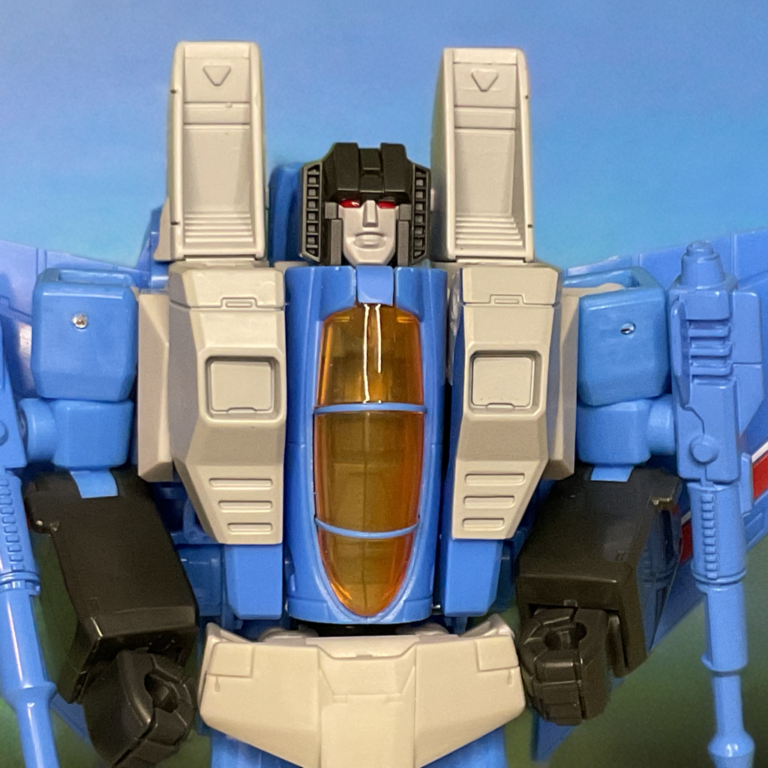
Chart of Transformers Studio Series 86 (The Transformers: The Movie) Action Figures Released So Far
The Studio Series 86 subline focuses on characters from the 1986 film. Below is a compiled list of released figures as of February 2026, based on official Hasbro releases and retailer data. Prices reflect original retail MSRP where known; secondary market values are approximate averages from recent sales on platforms like eBay and collector sites (as of early 2026—newer figures like Windcharger trend closer to retail, older/rarer ones command premiums).
The figures below represent market values at the time of this review. View the full and updated [The Transformers: The Movie (Studio Series 86)] guide.
| FIG # | NAME | CLASS | DATE | ORIG. RETAIL | CURRENT MARKET | RARITY | PRO TIPS |
| 86-01 | Jazz | Deluxe | 2021 | $24.99 | $45–$75 | Uncommon | Check for clear plastic stress on the roof hinge. |
| 86-02 | Kup | Deluxe | 2021 | $24.99 | $30–$60 | Common | The “Buzzworthy” repaint has better screen colors. |
| 86-03 | Blurr | Deluxe | 2021 | $24.99 | $35–$65 | Common | Ensure the front shield is included; it’s easily lost. |
| 86-04 | Hot Rod | Voyager | 2021 | $34.99 | $60–$100 | Rare | Includes Matrix/blast effects. Masterpiece quality. |
| 86-05 | Scourge | Voyager | 2021 | $34.99 | $45–$85 | Uncommon | Great for troop building; check wing alignment. |
| 86-06 | Grimlock | Leader | 2021 | $54.99 | $180–$250 | Grail | The Dinobot anchor. Highly prone to yellowing. |
| 86-07 | Slug & Daniel | Leader | 2021 | $54.99 | $130–$180 | Rare | Daniel is fragile; Slug’s gold plastic scratches easily. |
| 86-08 | Gnaw | Deluxe | 2021 | $24.99 | $40–$60 | Uncommon | Quintesson troop-builder. Watch tail-whip breakage. |
| 86-09 | Wreck-Gar | Voyager | 2021 | $34.99 | $55–$95 | Uncommon | Handle-bars on bike mode are prone to stress marks. |
| 86-10 | Sweep | Voyager | 2021 | $34.99 | $45–$80 | Common | Identical to Scourge; use for budget army building. |
| 86-11 | Perceptor | Deluxe | 2022 | $24.99 | $40–$75 | Uncommon | Features a real clear plastic microscope lens. |
| 86-12 | C. Starscream | Leader | 2022 | $54.99 | $45–$65 | Common | Overstocked at retail; easy to find at a discount. |
| 86-13 | Cliffjumper | Deluxe | 2022 | $24.99 | $50–$85 | Rare | Target Exclusive. G1 accurate vs. Earthrise. |
| 86-14 | Junkheap | Voyager | 2022 | $34.99 | $50–$90 | Uncommon | Sturdier than Wreck-Gar; excellent bike mode. |
| 86-15 | Sludge | Leader | 2022 | $54.99 | $140–$190 | Rare | Heavy figure; check knee and hip joints for “flop.” |
| 86-16 | Arcee | Deluxe | 2022 | $24.99 | $45–$80 | Uncommon | Significant backpack; posing is key for display. |
| 86-17 | Ironhide | Voyager | 2022 | $34.99 | $70–$110 | Rare | The definitive G1 Ironhide. Prices rising fast. |
| 86-18 | Hound | Deluxe | 2025 | $24.99 | $35–$55 | Common | MTMTE Collection. Released after long delays. |
| 86-19 | Snarl | Leader | 2023 | $54.99 | $150–$200 | Rare | Hard to find at retail. Completes the Dinobot team. |
| 86-20 | Dying Prowl | Deluxe | 2023 | $24.99* | $40–$65 | Rare | Target 2-Pack Exclusive. Features “orange spark” eyes. |
| 86-21 | Ultra Magnus | Commander | 2023 | $99.99 | $130–$210 | Rare | Commander scale. Don’t force shoulder joints. |
| 86-22 | Brawn | Deluxe | 2023 | $24.99 | $40–$70 | Uncommon | One of the most solid, high-quality Deluxes. |
| 86-23 | Ratchet | Voyager | 2023 | $34.99 | $60–$100 | Uncommon | Companion to Ironhide. Check lightbar for chips. |
| 86-24 | Scrapheap | Voyager | 2024 | $34.99 | $50–$90 | Common | Final unique Junkion mold for the “tribe.” |
| 86-25 | Blaster | Voyager | 2024 | $34.99 | $65–$120 | Rare | Eject is clear plastic; known for waist breakage. |
| 86-26 | Swoop | Leader | 2024 | $54.99 | $100–$140 | Rare | Final Dinobot. Wings are fragile; check hinges. |
| 86-27/28 | Dying Brawn/Ratchet | 2-Pack | 2024 | $54.99 | $80–$130 | Rare | Target Exclusive. Includes “smoke” damage. |
| 86-29 | Bumblebee | Deluxe | 2024 | $24.99 | $35–$60 | Common | Screen-accurate 1986 proportions (No VW license). |
| 86-30 | Springer | Leader | 2024 | $54.99 | $70–$115 | Uncommon | Massive improvement over the Siege triple-changer. |
| 86-31 | Optimus Prime | Commander | 2025 | $89.99 | $110–$190 | Grail | Definitive G1 Prime. Includes Trailer/Med-bay. |
| 86-32 | Galvatron | Leader | 2025 | $54.99 | $65–$95 | Uncommon | Clean purple deco. Often mislabeled #31 on box. |
| 86-33 | Bonecrusher | Deluxe | 2025 | $24.99 | $45–$70 | Uncommon | Forms left arm. Very sharp tread detailing. |
| 86-34 | Scavenger | Deluxe | 2025 | $24.99 | $45–$75 | Uncommon | Forms right arm. Shovel arm has limited rotation. |
| 86-35 | Thundercracker | Voyager | 2026 | $34.99 | $35–$60 | Common | Just released; widely available at retail today. |
| 86-36 | Scrapper | Voyager | 2025 | $34.99 | $50–$80 | Rare | Forms right leg. Vital for Devastator’s stability. |
| 86-37 | Mixmaster | Voyager | 2025 | $34.99 | $45–$75 | Uncommon | Forms the head. Ensure mixing drum is clicked in. |
| 86-38/39 | Hook/Long Haul | 2-Pack | 2025 | $99.99 | $120–$160 | Rare | Forms main torso. Heaviest part of the combiner. |
| 86-40 | Megatron | Leader | 2025 | $59.99 | $85–$120 | Rare | Screen-accurate bot mode. Transforms into a tank. |
| 86-LDR | Soundwave | Leader | 2026 | $59.99 | $65–$100 | Uncommon | Includes 3 cassettes. Check tape-door hinges. |
| 86-DLX | Windcharger | Deluxe | 2026 | $27.99 | $30–$50 | Common | Just released. Completes the shuttle crew. |
Price Fluctuation Warning: Secondary market prices can change rapidly due to collector demand, rarity, condition (mint vs. opened), reissues, anniversaries, and overall market trends. New releases often start near retail but may rise with scarcity; older figures can drop if restocked or fall if demand cools.