
The Top 4 Evil Warriors Lou Scheimer Had to Water Down in the Original He-Man Cartoon: My Childhood Suspicions Confirmed
I was all-in on Masters of the Universe from the very beginning — a full year before the Filmation cartoon ever hit the air in September 1983. The toys dropped in 1981–82, and those early minicomics painted a much darker, more savage world. By the time the cartoon premiered, I was just starting fifth grade. I expected something closer to Conan the Barbarian: gritty, intense, and a little scary. Instead I got Prince Adam in a pink vest, a floating wizard named Orko, a cowardly tiger called Cringer, and the Sorceress as a bird lady. The whole thing felt watered down.
Even as a kid I suspected the scariest-looking Evil Warriors had been deliberately softened into comedy relief so the show would be safe for kindergarten and first-grade viewers. Years later I started researching, and every suspicion I had was proven right. Lou Scheimer (Filmation’s founder and the show’s executive producer) faced real pressure from parent groups before a single episode aired. Here’s the full story — backed by the exact sources — plus my personal countdown of the four characters I believe got hit the hardest.
The Backstory: Parent-Group Pressure and Lou Scheimer’s Tough Choices
The toys launched with a raw, almost demonic edge in the early minicomics. Skeletor and his crew looked like they belonged in a horror comic. But as soon as Filmation started developing the cartoon, interest groups (led by people like Peggy Charren of Action for Children’s Television) heard the title “He-Man” and began complaining about violence — without ever seeing a frame of the show.
Lou Scheimer himself said in a 2019 SYFY oral history:
“Even before the show hit the air, the interest groups heard the title and started complaining about the violence in the show without ever seeing a single thing… They were all complaining, but they hadn’t even seen the show!”
Writer Michael Halperin added that they actually hired a child psychologist to write the moral-of-the-story endings at the end of every episode specifically “in response to a major outcry by parents’ groups that complained the show was nothing but a half-hour commercial for He-Man toys and was very violent.”
Filmation’s house style under Lou became “action, not violence.” Fights turned into wrestling throws that sent bad guys flying off-screen. Swords were almost never used to actually hurt anyone. And the most frightening-looking villains? They got turned into bumbling, yelling, slapstick comic relief so the show would feel safe for little kids.
Why the Cartoon Felt So Different From the Toys
Orko was invented purely for the cartoon (and voiced by Lou Scheimer himself) as instant comic relief. Cringer’s cowardly personality and the Prince Adam secret identity (complete with that infamous pink vest) were added to give kids someone to relate to. The Sorceress became a magical bird guardian.
All of it softened the darker Conan-meets-fantasy vibe of the original toys and minicomics. The result was a show that still looked cool on the surface but played much safer.
Interestingly, while Lou Scheimer and Filmation had to soften He-Man here in America because of all that parent-group pressure, the Japanese mecha robot cartoons of the same era went in the complete opposite direction — especially the original uncut versions. Take Voltron, which was based on Beast King GoLion: the Japanese original was way grittier, with actual character deaths (Sven actually dies instead of just falling into a coma), brutal slave massacres, graphic violence, and far darker storylines full of real consequences. Shows like Voltes V and God Mars were even more intense — packed with family betrayal, tyranny, sacrifice, and emotional stakes that American TV would never allow. It really shows the cultural difference: Japanese kids grew up watching anime that didn’t pull punches and treated them like they could handle drama and grit, while here in the States advocacy groups demanded everything stay safe, moral, and kid-friendly for the youngest viewers. No wonder those Japanese imports felt so much more epic when you could track down the originals!
Countdown: The Top 4 Evil Warriors That Had to Be Watered Down
These four always stood out to me as the most intimidating on the toy shelf. Their designs screamed menace — demonic, savage, mechanical horrors straight out of a darker fantasy world. In the Filmation cartoon, they became Skeletor’s loud, clumsy punching bags, constantly failing in hilarious ways. The contrast was huge, and looking back, it’s clear Lou Scheimer and the team dialed them way back to keep things safe and fun for little kids. Here’s the expanded breakdown on each one.
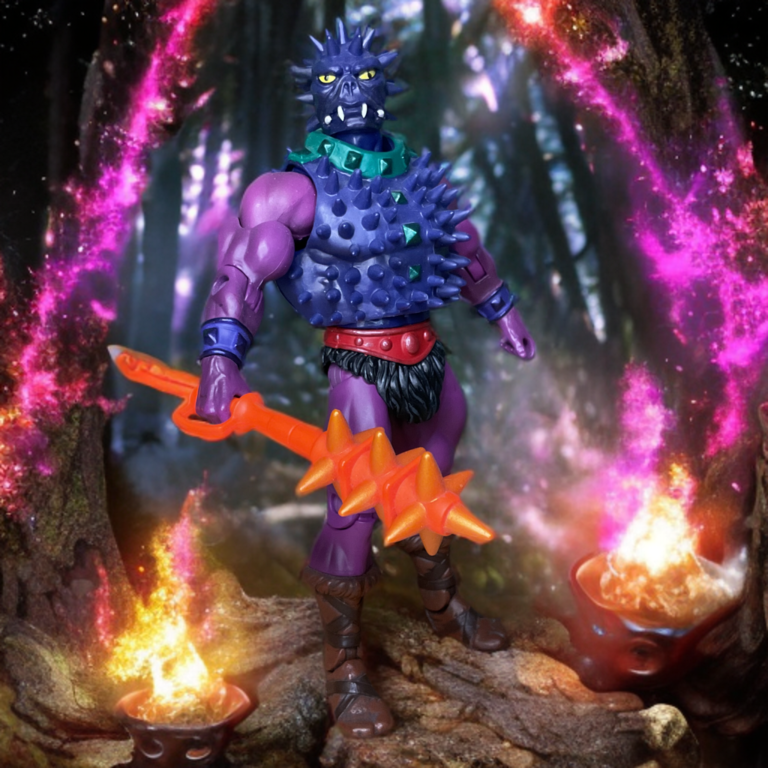
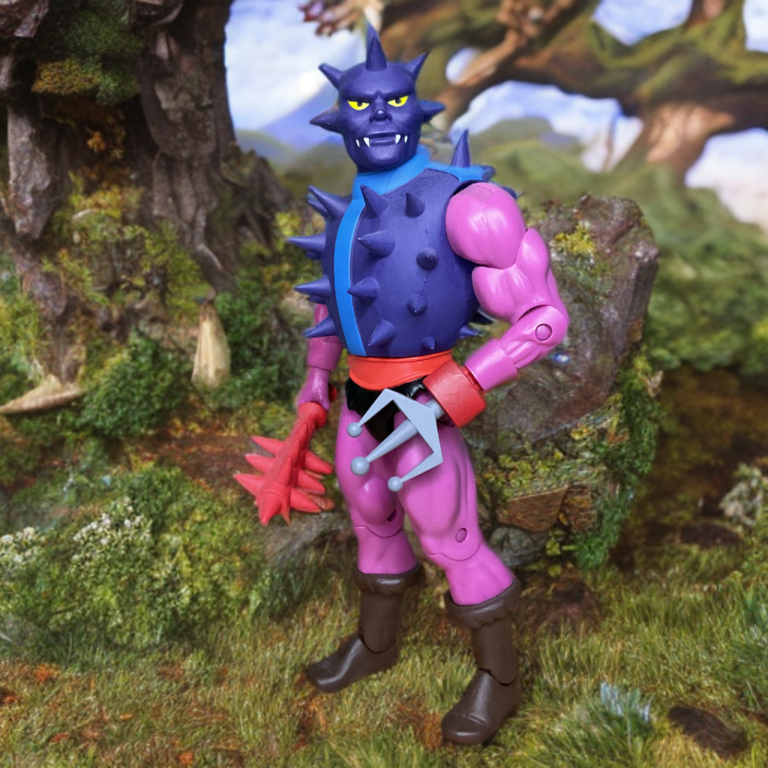
#4: Spikor – The Spiky Demon Turned Total Buffoon
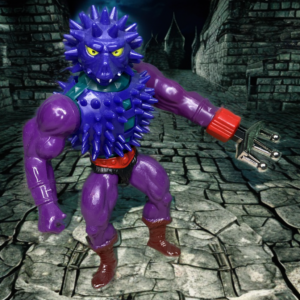
Toy version: Designed by Roger Sweet with a porcupine-inspired look (originally brown with a tail in concepts), he ended up as a purple, horned nightmare covered head-to-toe in deadly rubber spikes, a trident for an arm, and a face that looked like it could impale you just by glaring. Pure nightmare fuel for a fifth-grader — he screamed “untouchable master of evil combat” right on the packaging.
Cartoon version: Appearing in just three episodes (“The Games,” “Visitors from Earth,” and a cameo), Spikor is “undoubtedly the most stupid and useless” of Skeletor’s henchmen, per the He-Man Fandom Wiki. He speaks in a stilted, robotic stutter, acts childlike and clumsy, and never once weaponizes those spikes — they’re just there for show. The wiki even notes it was “quite probable that this was intentional on Filmation’s part, in order to make his character more suitable for a children’s audience given his potentially frightening design.”
In “The Games,” he’s bizarrely chosen to rep evil in alien contests after being powered up by the other minions’ energy — but he still fouls up constantly and serves as pure comic relief. The only glimpse of menace is a brief silent, zombie-like stare in “Visitors from Earth” before fading out. Otherwise, he’s Skeletor’s ultimate punching bag. Exactly what I suspected as a kid: they took the scariest-looking guy and made him a total joke so no one would have nightmares.
#3: Trap Jaw – The Cybernetic Horror
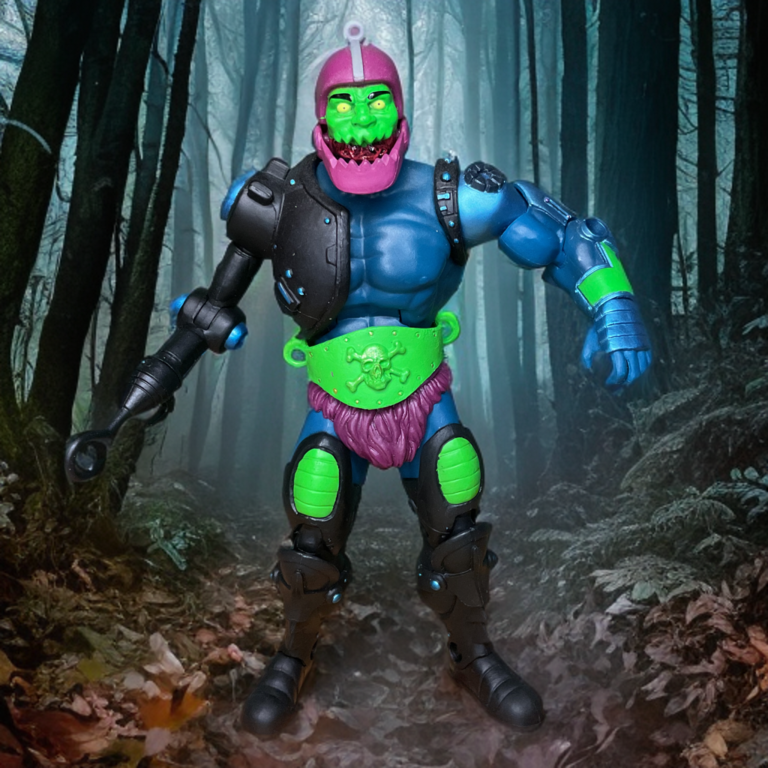
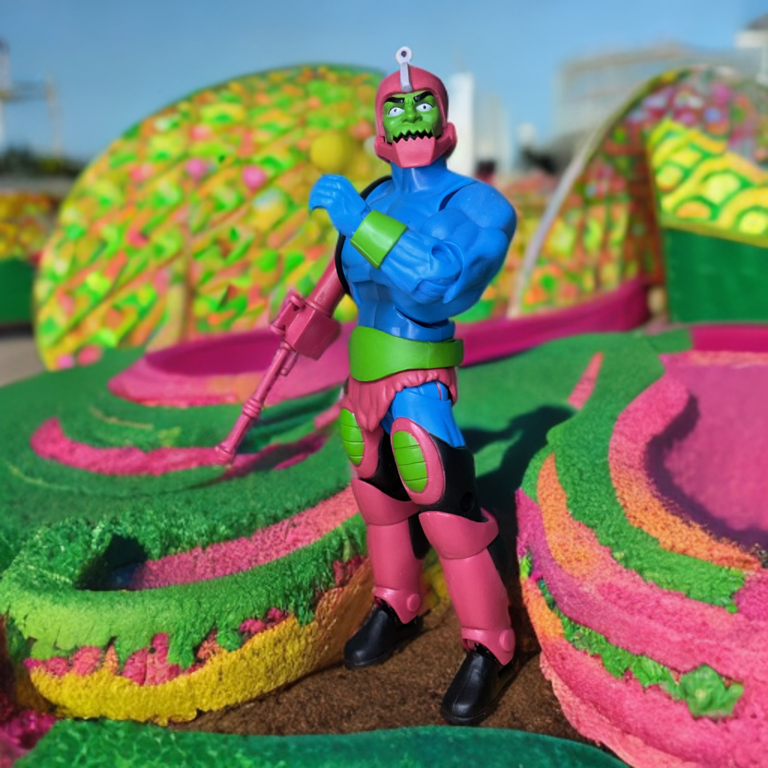
Toy version: A blue-skinned cyborg freak with a massive metal jaw for biting through anything, a hook hand, and a swappable arm cannon — he looked like a post-apocalyptic sci-fi monster escaped from a horror comic. The early minicomics hinted at a brutal, mechanical killer vibe.
Cartoon version: One of Skeletor’s loudest, whiniest, most incompetent sidekicks (voiced by Lou Scheimer in spots for extra goofiness). He’s constantly complaining, getting smacked around by Skeletor, and his weapons turn into slapstick gags — like malfunctioning gadgets or him accidentally blasting himself. The Filmation design simplified him (maroon boots/arm matching the helmet/jaw, no organic arm like the prototype), making him look cartoonishly bulky instead of terrifying.
He’s the “wizard of weapons” and Snake Mountain’s mechanic, but he bungles everything hilariously — think episodes where he tries to fix something and it backfires spectacularly, or he gets called a “metal munching moron” by Skeletor. All the cybernetic menace stripped away so he could safely fail every week and provide laughs instead of scares. The toy promised a nightmare; the show delivered a lovable loser.
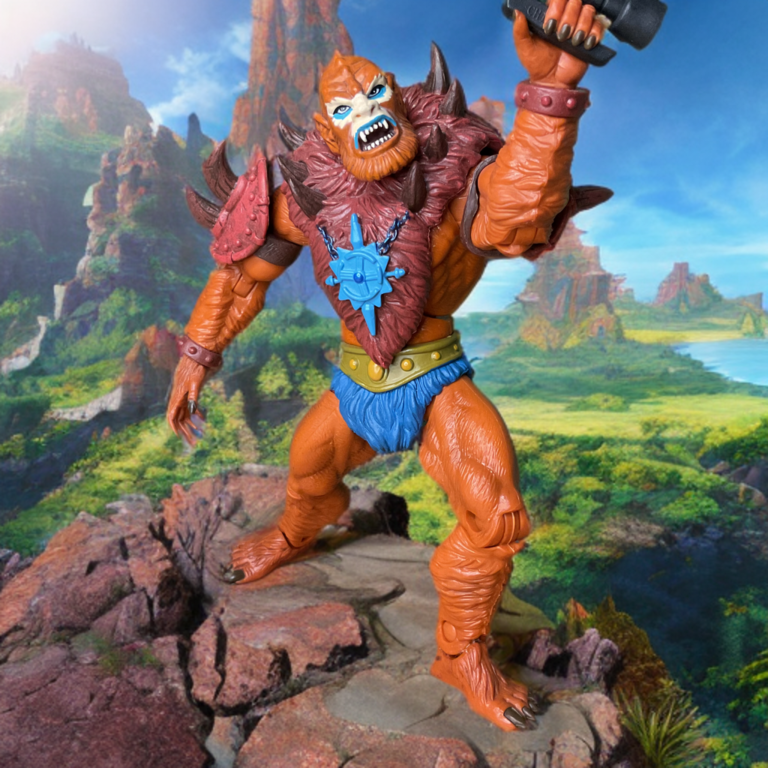
#2: Beast Man – The Savage Feral Beast
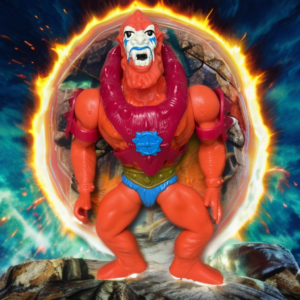
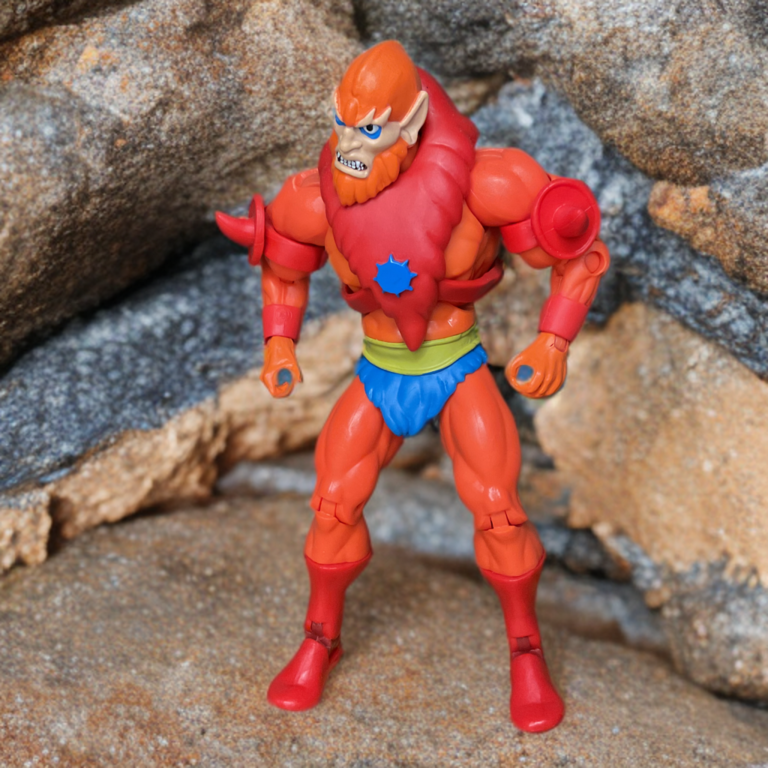
Toy version: An orange-furred, whip-wielding savage with fangs, claws, glowing red eyes, and a demonic ape-man build — basically a pulp horror brute. The early minicomics made him genuinely brutal, controlling beasts with raw power and looking ready to tear apart anything in his path.
Cartoon version: Skeletor’s favorite punching bag (voiced by John Erwin). He resents the abuse early on but lacks the guts to rebel, eventually settling into a bumbling, comedic role. He gets called “fur-face,” slapped constantly, and treated like dumb muscle. Over time, his portrayal leans hard into goofy — willingly taking Skeletor’s insults and bungling schemes for laughs.
The wiki notes that while early episodes gave him some edge (resenting Skeletor, controlling animals telepathically), later ones restore darker hints in spots like “The Shadow of Skeletor” or “Orko’s Return,” but mostly he’s comic relief. Episodes show him failing at beast control or getting outsmarted in slapstick ways. The feral danger was dialed way back — he still looks intimidating on screen, but he never acts like the savage the toy and minicomics promised. It’s like they kept the scary shell but filled it with a clown.
#1: Skeletor – The Skull-Faced Overlord Himself
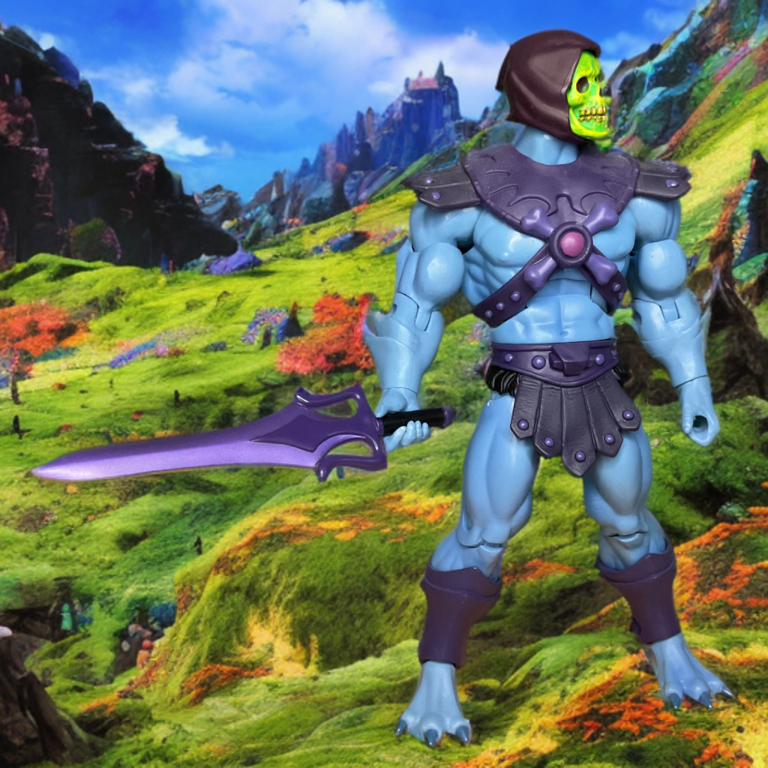
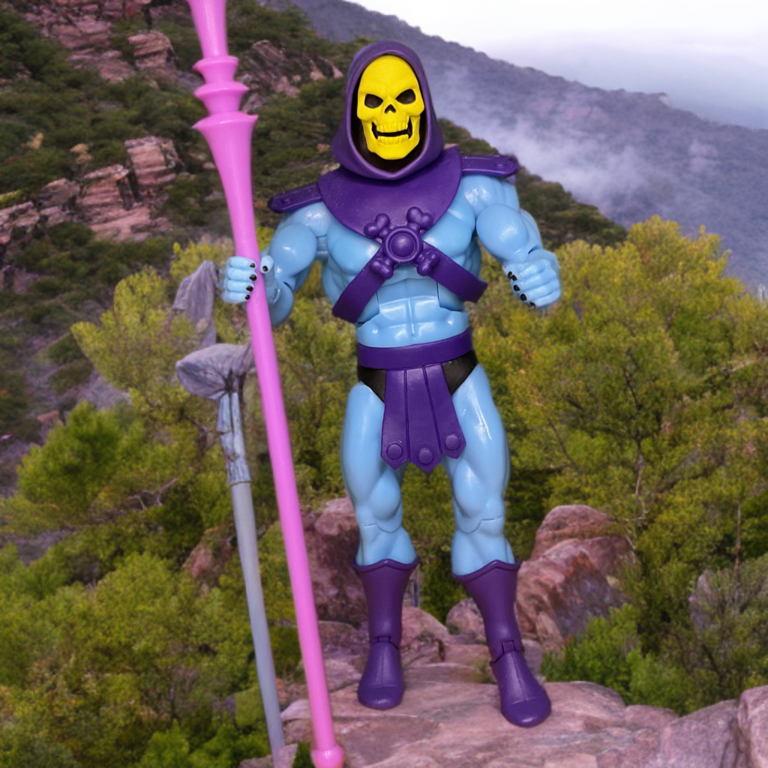
Toy and minicomic version: A literal blue-skinned demon with a bare skull face, purple hood, bone armor, and raw evil energy — the ultimate Lord of Destruction. Early minicomics painted him as a ruthless, otherworldly horror from another dimension, scheming with pure malice.
Cartoon version: The biggest example of the softening. Voice actor Alan Oppenheimer added that iconic cackling laugh himself because a straight snarling villain would’ve been too intense — turning Skeletor into a theatrical, mustache-twirling goof who schemes big but fails spectacularly. He’s arrogant, whiny, childish, and incompetent half the time, yelling insults like “pathetic pitiful pinheads” at his minions (Beast Man and Trap Jaw get the worst of it).
While he still wants Castle Grayskull and power, the show makes him the king of slapstick — his plans blow up in his face, he throws tantrums, and he’s often outwitted by his own team’s stupidity. If the skull-faced demon had stayed as menacing and competent as the toy/minicomic version, parents would’ve freaked out over the “violence.” Instead, he became endlessly quotable comic relief wrapped in evil purple robes. Lou Scheimer’s team nailed the balance: scary enough to look cool, funny enough to be harmless.
Voltron Anime Differences
Voltron: Defender of the Universe (the classic 1980s American cartoon) was heavily adapted from the Japanese anime Beast King GoLion (百獣王ゴライオン, aired 1981–1982), and the differences are massive—especially in tone, violence, character fates, and overall grit. World Events Productions (WEP) licensed GoLion footage but edited it extensively to fit U.S. kids’ TV standards in the early ’80s, removing gore, death, and darker themes while adding new episodes, music, sound effects, and plot tweaks.
Here’s a clear breakdown of the key differences:
1. Tone and Violence Level
• GoLion (Japanese original): Much darker and more mature. It featured graphic violence, blood, gore, slavery, massacres, genocide themes, brutal deaths (including dismemberment and slaughter scenes), and high emotional stakes. The story treated viewers as capable of handling real consequences, tragedy, and moral complexity—typical of many mecha anime from that era.
• Voltron (American version): Heavily censored for young audiences. All explicit violence was toned down or removed—fights became cleaner, no blood/gore, deaths were avoided or rewritten (e.g., characters “sent to another dimension” or revealed as robots). It emphasized heroism, teamwork, and lighter adventure, aligning with U.S. broadcast standards that pressured shows to be “safe” for kids.
2. Character Deaths and Fates (Biggest Shock for Fans)
• Sven/Takashi Shirogane: In GoLion, Sven’s counterpart (Takashi Shirogane, aka “Quiet”) dies permanently early on (around episode 6) in a brutal battle against Honerva (Haggar) and her forces. Later, his identical twin brother Ryou appears and also dies dramatically (falling with Prince Sincline/Lotor).
In Voltron, Sven is “injured” and falls into a coma instead of dying. He later returns (using footage of the brother), becomes a slave, escapes, and reunites with the team—keeping him alive for ongoing stories and romance arcs (e.g., with Princess Romelle).
• Other deaths: GoLion had many on-screen killings (including side characters, innocents, and villains like Nanny/Hys, who sacrifices herself). Voltron either cut these scenes, changed victims to robots/duplicates, or omitted them entirely. Characters like Zarkon/Daibazaal and others who die in GoLion often survive or have altered endings in Voltron.
3. Plot and Setting Changes
• Backstory: GoLion starts with a post-apocalyptic Earth devastated by World War III (nuked into oblivion), so the pilots are survivors/exiles on planet Altea. Voltron changes this to a more hopeful setup: Earth is fine, and the pilots are from Galaxy Garrison on a mission to find Voltron and stop Zarkon.
• Episode count and structure: GoLion has 52 episodes. Voltron’s “Lion Force” season uses those but reorders some, adds new animation/episodes (especially later arcs like Queen Merla, created specifically for the U.S.), and extends to ~72 episodes total by blending in footage from an unrelated anime (Armored Fleet Dairugger XV for the “Vehicle Voltron” season).
• Names and details: Major renames (e.g., Princess Fala → Allura, Honerva → Haggar, Daibazaal → Zarkon, Akira Kogane → Keith). Some relationships and subplots were softened or invented for American appeal.
4. Other Edits
• New sound effects (e.g., dramatic “clang” for the Blazing Sword—many fans say these actually improved the action feel).
• Different music (U.S. theme is iconic; Japanese OP/ED was considered weaker by some).
• Moral/heroic emphasis added, with less focus on despair or tyranny.

In short, if you grew up with the American Voltron, the original GoLion feels like a grittier, more adult “what if” version—closer to the intense mecha anime like Voltes V or God Mars you mentioned earlier. It’s why tracking down the Japanese version (available on platforms like Crunchyroll in some regions) hits so differently: no punches pulled, real stakes, and cultural willingness to show darker themes to younger viewers in Japan versus the heavy U.S. censorship for “kid-friendliness.”
This mirrors the He-Man softening talked about earlier—American adaptations often dialed back the edge that Japanese originals embraced.
Bonus – Where Was Stinkor?
Stinkor is one of the most infamous “what if” characters from the original Masters of the Universe era—especially when it comes to the Filmation cartoon (1983–1985 He-Man and the Masters of the Universe).
Key Details on Stinkor in the Filmation Era
- No Appearance in the Cartoon: Stinkor never appeared in any episode of the original Filmation-produced He-Man series (or the She-Ra spin-off). He is the only major villain action figure released during the main toy line’s peak (1982–1985) that was completely omitted from the show. Released in 1985 as part of the toy line, he came too late or was deemed unsuitable for inclusion.
- Why Filmation/Lou Scheimer Skipped Him: According to various sources, including interviews and behind-the-scenes accounts (e.g., from animation staff and MOTU historians), Lou Scheimer and the Filmation team refused to use Stinkor. The character—literally an “Evil Master of Odors” whose power was unleashing a horrible, toxic stench—was seen as too crude, juvenile, and fart-joke-heavy for a kids’ show already under scrutiny from parent groups and censors. Even though the cartoon had slapstick violence, bumbling villains, and softened designs (as your article covers), a walking skunk-man built around bad smells crossed a line into “gross-out” territory that could invite more complaints. One account notes Filmation wasn’t thrilled with the concept overall, viewing it as too offensive or stupid despite the show’s existing humor.
- Toy vs. Cartoon Contrast:
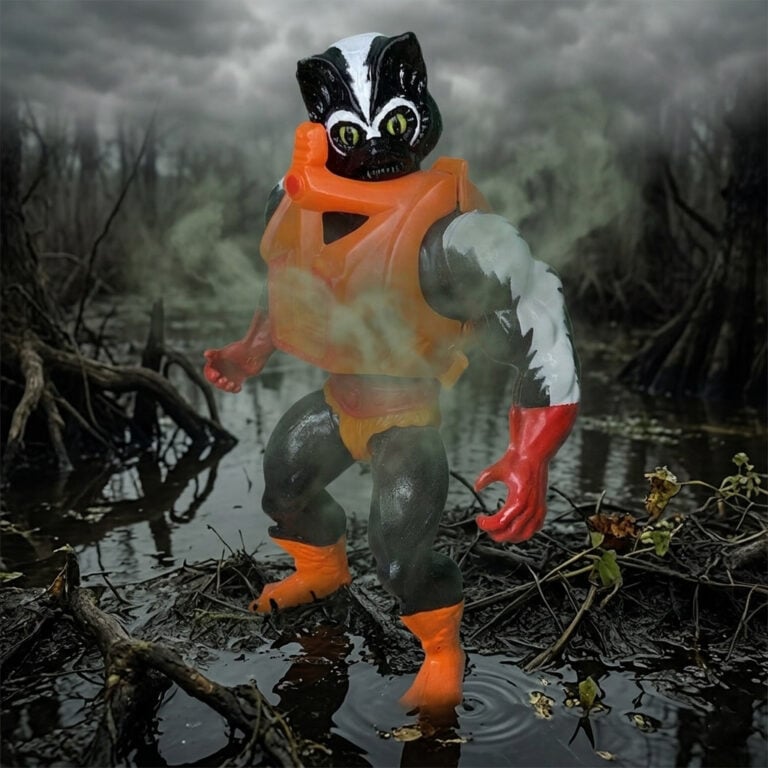
- Toy (1985): A black-and-white skunk humanoid (repainted/retooled from Mer-Man with recycled Mekaneck chest armor and a Castle Grayskull shield). Famously, the plastic was chemically treated to smell like patchouli/musky odor—kids remember the figure reeking right out of the package! His mini-comic (“The Stench of Evil”) gave him a backstory as Odiphus from a race of Peleezeans, with his stench as a weapon that could immobilize foes.
- Cartoon: Zero presence. No cameos, no mentions. This fits the pattern in your article of “watering down” scary or edgy designs—Stinkor was arguably too on-the-nose (pun intended) gross to soften into comic relief without risking backlash.
- Later Appearances (Post-Filmation): Stinkor finally got his animated debut in the 2002 Mike Young Productions reboot (He-Man and the Masters of the Universe), where he had a full origin: starting as thief Odiphus (a cat-like figure), mutated by chemicals into the stinky villain, complete with an oxygen mask to handle his own fumes. He appeared in episodes like “The Sweet Smell of Victory” (his spotlight debut), had speaking roles, and even backstory flashbacks in season 2. He also popped up in Masters of the Universe: Revelation (voiced by Jason Mewes) with a garbage-lair belch attack.
In short, Stinkor’s absence from Filmation is a perfect example of the “softening” pressures you discussed—Lou Scheimer drew the line at a literal stink-based villain, even as other scary toys got turned into goofy sidekicks. That’s why your article’s closing image of him “finally sneaking his way into a Lou Scheimer production” is such a fun, ironic nod—he had to wait decades for any cartoon spotlight!
Recommended reading: Scented Rubber and Fuzzy Plastic: How Mattel Sold Us the Same 4 Toys Over and Over
Conclusion: The Toys Were Always Darker — And That’s Why We Still Love Them
Lou Scheimer did what he had to do to get the show on the air and keep it there for 130+ episodes. The parent-group pressure was real, and the changes worked — He-Man became a massive hit with kids of all ages. But for those of us who grew up with the original toys and minicomics, the cartoon will always feel like a slightly safer, pink-vest version of the gritty world we fell in love with first.
If you’re a collector like me, go pull out those vintage Evil Warriors. Hold Spikor, Trap Jaw, Beast Man, and Skeletor next to the cartoon stills. The difference jumps right out. That’s the magic of Masters of the Universe — the toys gave us the raw version, and the cartoon gave us the fun, safe one we could all enjoy together.
This article is a little bit different than what I usually do on the rest of the site, but hey, if it gets a lot of hits, I’ll do more stuff like this. This is kind of experimental, but I’ll definitely do more in the future if I can think of angles like this one.
By the Power of Grayskull… let’s keep the vintage memories alive!