
The Official Fisto Guide: 42 Years of Waiting for One Gloved Punch to Become a Grail
Fisto stands as one of the most straightforward and reliable figures among the Heroic Warriors in the Masters of the Universe franchise. In a realm filled with enchanted weapons, cosmic powers, and elaborate schemes, he relies on raw physical strength channeled through his oversized metallic right hand. This makes him the go-to specialist for breaking barriers—literal or otherwise—while the rest of the team handles the more mystical threats.
The Straightforward Powerhouse
To expand on Fisto’s role as a “Straightforward Powerhouse,” we should lean into the technical and narrative specifics that define his “no-nonsense” identity across different media, while ensuring we stick to the headband-free accuracy of the original 1984 design.
Eternian Archives: The Fisto Files
- 1. 1984 Original Toy Line Debut
- 2. Stridor's Role with Fisto
- 3. Filmation Animated Series (1980s)
- 4. 200X Mike Young Productions Series
- 5. MOTU Classics (2008-2015)
- 6. Modern Tribute: MOTU Origins (2021)
- 7. Netflix Revelation (2021)
- 8. Netflix CGI Series (2021)
- 9. New Eternia Masterverse Fisto (2024)
- 10. The Reliable Force
The Mechanical Specialist: Function Over Flash
Fisto’s design philosophy in the 1980s was rooted in brute force physics. While characters like He-Man relied on the Power of Grayskull and Man-At-Arms utilized high-tech weaponry, Fisto was the definitive “Tank” of the Heroic Warriors.
The Fist as a Tool: In early lore, his oversized right hand wasn’t just for combat; it was often depicted as a utilitarian tool. He was the “breaker of barriers,” tasked with smashing through Grayskull’s reinforced doors or clearing rockslides that trapped his allies.
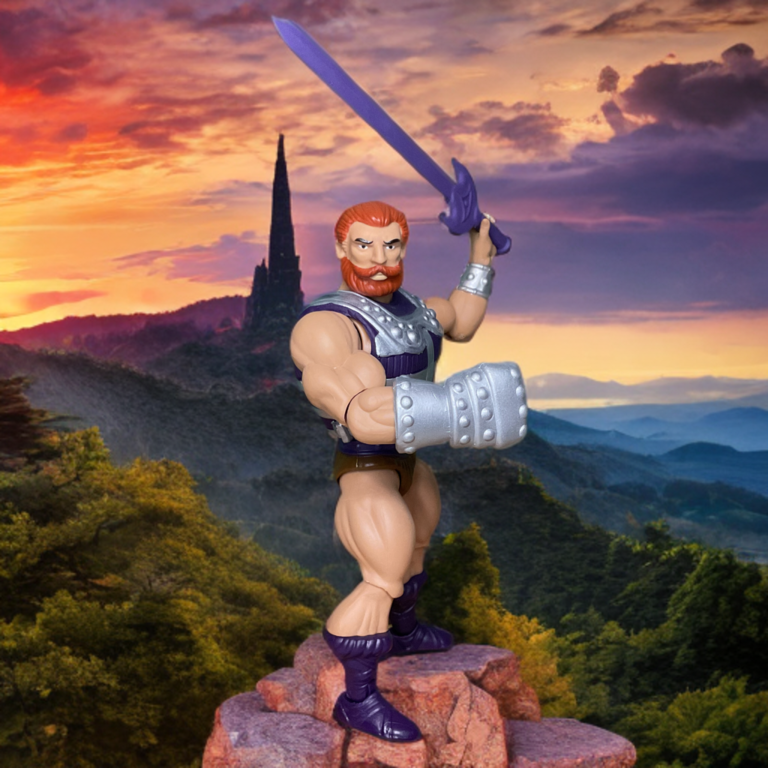
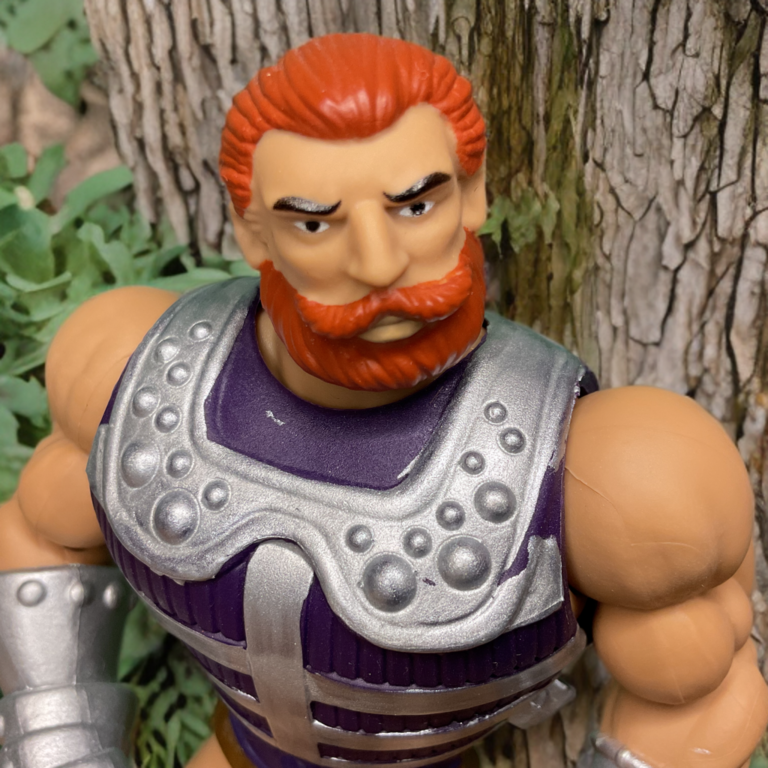
- The 1984 Aesthetic: His original look was grounded in a “Highland/Woodsman” motif. The thick, reddish-brown beard and fur-trimmed boots suggested a character who lived off the land. By omitting the headband found in later iterations, the 1984 figure maintained a raw, rugged appearance that felt more “mercenary” than “soldier.”
Combat Philosophy: The “Anti-Jitsu”
Fisto’s straightforward nature is best defined by his rivalry with Jitsu. While Jitsu utilized the “Chopping” motion (representing finesse and martial arts), Fisto utilized the straight-line punch.
Momentum over Agility: In the “Clash of Arms” and “The Games” storylines, Fisto is rarely shown dodging. His combat style is “unyielding”—he takes the hit to deliver a more devastating counter-punch.
The Broadsword Paradox: Despite being the “Hand-to-Hand Fighter,” the inclusion of his purple broadsword in 1984 added a layer of versatility. It suggested that while his fist was his primary weapon, he was a trained warrior capable of traditional swordsmanship when reach was required.
Narrative Weight
Fisto often serves as the “Common Man” of the Heroic Warriors. He lacks the royal lineage of Prince Adam or the cosmic burden of the Sorceress. This makes him a grounding force in the MOTU universe—a powerhouse whose “effectiveness remains consistent” precisely because he doesn’t rely on external magic to get the job done.
The Evolution of the “Big Hand”
The origin of Fisto’s signature weapon is one of the most debated aspects of his history, varying significantly by era:
| Continuity | Origin of the Fist | Purpose/Nature |
| Original Mini-Comics | Natural/Enchanted | Usually treated as a natural part of his physiology or a magical gift of strength. |
| 200X Series (Mike Young) | Cybernetic Prosthetic | A massive mechanical gauntlet built by Man-At-Arms to replace a hand lost in the Great Unrest. |
| DC Comics / Classics | Ancient Artifact | Sometimes depicted as a “Shokan” style gauntlet or a relic passed down through his lineage. |
1984 Original Toy Line Debut
Fisto joined the Masters of the Universe ranks during the third wave of figures. Positioned as the “Heroic Hand-to-Hand Fighter,” he provided a direct heroic counterpoint to the villainous Jitsu, who was released in the same wave with a similar “chopping” gimmick.
Key Features & Design
The Power Punch: Unlike the standard “Power Punch” (waist-twist) found on most figures, Fisto featured a unique spring-loaded right arm. When pulled back and released, his oversized metallic fist delivered a heavy-duty striking motion.
The Sculpt: Fisto utilized the standard “muscular” torso but featured a unique head sculpt with a thick, groomed brown beard. Notably, the vintage figure’s hair is neatly coiffed with no headband, a distinct departure from his cartoon counterpart.
Accessories: He was packaged with a large purple broadsword, which reused the mold from the Castle Grayskull weapon rack/Tri-Klops sword, but in a unique “Fisto Purple” hue.
Armor: His removable chest armor featured a high-collar, “fur-lined” aesthetic that matched his boots, leaning into his rugged, woodsman persona.
Media & Lore Expansion
Fisto’s debut was heavily supported by the “The Clash of Arms“ mini-comic. This story was crucial for establishing several character pillars:
The Rivalry: The comic solidified his rivalry with Jitsu, pitting “Fist vs. Golden Hand” in an arena-style combat that highlighted their mirrored play features.
The Steed: Fisto was frequently paired with Stridor, the armored heroic warhorse. This was a brilliant marketing move by Mattel, as the two were often sold together in a “Figure and Vehicle” gift set, mirroring the Night Stalker/Jitsu pairing.
The “Forest Outcast”: Early lore often hinted at Fisto being a reformed character or a rugged loner from the forests of Eternia, providing a grittier edge compared to the more “regal” Palace Guards like Teela or Man-At-Arms.
| Feature | Vintage Toy (1984) | Filmation Cartoon (1984) |
| Headgear | None (Bareheaded) | Red/Purple Headband |
| Fist Color | Dull Metallic Silver | Shiny Silver/Chrome |
| Sword Color | Solid Purple | Rarely used (focused on fist) |
| Beard | Brown / Well-defined | Brown / Simplified |
Stridor’s Role with Fisto
Stridor serves as the armored robotic war horse primarily associated with Fisto across much of the Masters of the Universe franchise. While Stridor is technically a steed for the Heroic Warriors in general—and occasionally listed as He-Man’s mount on packaging—the strongest and most consistent pairing links him to Fisto, starting from their simultaneous 1984 release and continuing through comics, marketing, and later continuities.
Origins in the 1984 Vintage Toy Line
Stridor debuted in 1984 as the “Heroic armored war horse,” a large, posable robotic equine figure with metallic armor plating, a saddle, and mechanical details like articulated legs and a head that could move. He was sold individually or—most notably—in a widely available gift set bundled with Fisto, priced around $12.99. This packaging choice made Fisto the only Heroic Warrior besides He-Man to receive his own dedicated steed/vehicle in the vintage line.
⬆️ This video is embedded here with Super Dave’s direct permission and is a fantastic supplement to our written review. Fantasy Action Figures is a separate entity from the Super Dave channel, but we love his work and encourage you to subscribe to his channel for more great content!
Toy commercials, catalog artwork, and storybooks frequently depicted Fisto riding Stridor into battle, reinforcing the connection. (The evil counterpart Night Stalker followed a similar pattern with Jitsu.) Stridor’s design emphasized heavy cavalry support: durable armor for charging through enemy lines, ideal for a powerhouse like Fisto who specialized in close-quarters smashing.
Mini-Comics and Early Stories
In the vintage mini-comics, the bond is explicit. In “The Clash of Arms,” Stridor carries Fisto on border patrol duties. When Evil Warriors ambush and capture Fisto, forcing him into Skeletor’s deadly Circle of Doom arena, Stridor escapes and rushes to fetch He-Man, leading to Fisto’s rescue. Other stories, like certain Golden Books tales, pair them again: Fisto rides Stridor while leading searches or battling foes such as Beast Man. These portrayals cement Stridor as Fisto’s reliable transport, allowing the hand-to-hand fighter to cover ground quickly and deliver his devastating punches where needed most. Stridor functions less as a mere vehicle and more as a loyal partner—mechanical, yes, but capable of independent action when the situation demands.
Filmation Animated Series
The 1980s Filmation cartoon largely ignores the Fisto-Stridor link. Stridor appears in a handful of episodes as a generic Heroic Warriors mount (sometimes tied more loosely to He-Man or the team), but he receives no direct association with Fisto. Fisto’s episodes focus on his forest-outlaw-to-hero arc without involving the horse. This marks one of the few major continuities where the pairing doesn’t carry over, likely due to the show’s selective use of toy-line elements.
200X Series (Mike Young Productions)
In the 2002-2004 animated series, Stridor returns to a prominent role tied to Fisto (Malcolm). As the estranged brother of Man-At-Arms, Fisto receives his mechanical fist upgrade after injury, and Stridor—his armored steed—reappears as part of his gritty, battle-hardened persona. The show emphasizes Fisto as heavy support cavalry, with Stridor enabling rapid battlefield movement for the big man. This version keeps the horse’s robotic nature while amplifying its utility for a warrior who relies on brute force and direct charges.
Masters of the Universe Classics
The Classics line (2008-2015, including Super7 continuations) blends origins and solidifies Stridor as Fisto’s companion. Bios and packaging maintain the vintage-era pairing, with Fisto often shown mounted on Stridor in artwork. The figure releases (including Stridor reissues) treat the duo as a natural match, echoing the 1984 gift set. Stridor’s bio sometimes notes captures and rescues involving Fisto, reinforcing loyalty. Collectors prize the combination for display—Fisto’s bulk fits Stridor’s scale perfectly, especially in updated articulated versions.
Later Appearances and Modern Lines
In Netflix’s Masters of the Universe: Revelation (2021 onward), Stridor appears sparingly but aligns with the veteran Heroic Warriors. While not center-stage with Fisto in every scene, the overall lore keeps the association alive through team dynamics. Modern reissues like Origins (2021) bring back fully articulated Stridor (unlike the stiff vintage version), compatible with Fisto figures from various eras, allowing fans to recreate classic charges. Stridor remains the go-to ride for Fisto in most non-Filmation media.
Overall Role
Stridor exists to give Fisto mobility and battlefield presence beyond what legs alone provide. In a world of flying vehicles and magic, the robotic horse offers straightforward, ground-pounding transport—perfect for a no-frills hero who punches through problems. The partnership highlights Fisto’s status as a frontline heavy-hitter: he rides in hard, dismounts, and ends fights up close, while Stridor handles the approach and extraction. It’s a practical duo that stands out because it doesn’t rely on destiny or gadgets—just muscle, metal, and horsepower. When the terrain gets rough and the enemy lines need breaking, Fisto and Stridor charge together, proving that sometimes the best backup is four mechanical legs and a whole lot of attitude.
Fisto in the Filmation Animated Series (1980s)
In the Filmation He-Man and the Masters of the Universe cartoon, Fisto received a dedicated origin in the episode “Fisto’s Forest” (Season 2, Episode 70, aired around 1984). Here, he begins as a gruff forest-dweller under Skeletor’s influence, terrorizing a local village and the surrounding woods while serving as a sort of enforcer. He rules the forest harshly, but after an encounter with He-Man and witnessing an act of kindness (from a young girl in some accounts), he experiences a change of heart. He abandons his villainous ways, receives a pardon from King Randor, and joins the Heroic Warriors. The episode frames him as a redeemed outlaw with a rough exterior but a core of honor. In other appearances, he swings through vines in his forest home and uses his massive fist to smash through barriers or defeat enemies directly. His personality comes across as gruff yet ultimately good-hearted, a forest guardian turned ally.
2002-2003 Mike Young Productions Series (200X)
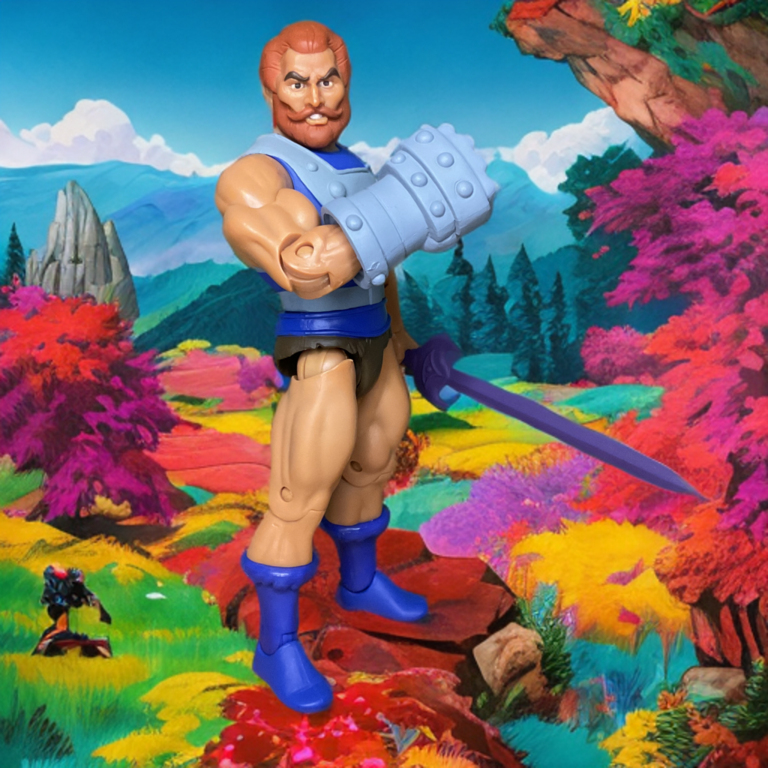
The 2002 revival (often called 200X) gave Fisto a deeper, more dramatic backstory. Introduced in the later episodes, he is Malcolm, the older brother of Duncan (Man-At-Arms). During the Great Unrest—a major war 16 years prior—Malcolm was accused of deserting his unit, leading to estrangement from his brother and years of exile. He wandered Eternia with a memory gap from a battle injury, eventually settling in rough areas and getting into bar fights. His right hand, initially natural but enlarged or mutated, is damaged in a clash with Snake Men; Man-At-Arms then repairs and upgrades it into a large mechanical metal fist. This version portrays him as bitter and gritty at first, but he reconciles somewhat with Duncan and aids the Masters. The series also ties him back to Stridor as his mount, emphasizing his role as heavy support in battles. (Note: Due to trademark issues with Star Wars’ Kit Fisto, he was sometimes referred to as “Battle Fist” in related materials.)
The transition from the 1984 Vintage Fisto to the 2002 (200X) reimagining is one of the most dramatic shifts in the Masters of the Universe line. It marked his evolution from a “Rugged Woodsman” to a “Heavy-Duty Cybernetic Soldier.”
Here is the breakdown of how his “Straightforward” design was modernized for a new generation.
Fisto Evolution: 1984 Vintage vs. 2002 (200X) Modern
| Feature | 1984 Vintage (Wave 3) | 2002 Modern (Four Horsemen) |
| Design Motif | The Woodsman: Rugged, fur-trimmed, and organic. | The Juggernaut: Highly armored, tech-heavy, and industrial. |
| The “Fist” Origin | Likely a magical or natural physical trait. | Cybernetic: An oversized prosthetic built by Man-At-Arms. |
| Head Sculpt | Neat brown hair/beard; No Headband. | Spiky “anime-style” hair; Added Headband. |
| The “Punch” Gimmick | Spring-loaded “Power Punch” (Snap-back action). | “Smash-Down” action (Activated by a back button). |
| Primary Weapon | Small purple broadsword (Recolored mold). | Giant “Buster” Sword: Massive, tech-etched blade. |
| Armor Style | Minimalist chest plate with fur collar. | Heavy mechanical harness with hydraulic details. |
Analysis of the 200X Shift
The 2002 redesign by the Four Horsemen leaned heavily into the “Straightforward Powerhouse” concept but translated it through a “Tech-Fantasy” lens.
1. The Proportions
While the 1984 figure had a large fist, the 200X version made it gargantuan. It was no longer just a hand; it was a mechanical gauntlet that looked like it belonged on a piece of construction equipment. This emphasized that Fisto wasn’t just a fighter—he was a mobile demolition unit.
2. The Backstory Depth
In the 200X animated series, Fisto’s “straightforwardness” was given emotional weight. He was revealed to be Man-At-Arms’ estranged brother, Tyke.
His decision to leave the palace and live as a “lone wolf” in the mountains explained his rugged 1984 appearance, while his return to the Heroic Warriors required the high-tech upgrades seen in the 2002 toy.
3. Weaponry Expansion
In 1984, the purple sword felt like a secondary accessory. In 2002, his sword was nearly as large as the figure itself. This changed his combat silhouette from a “boxer” to a “heavy-weapon specialist,” though he still relied on the “Power Punch” as his finishing move.
4. The Return of the Headband
Interestingly, the 2002 figure adopted the headband from the 1980s Filmation cartoon, effectively merging the “Toy” and “Media” looks of the character into one definitive modern version.
Masters of the Universe Classics (2008-2015)
The Classics toy line synthesized previous versions into a unified biography. Fisto’s real name is Malcolm, older brother to Duncan (Man-At-Arms). Serving under King Miro during the Great Unrest, he was wounded, suffered magical amnesia, and wandered to a mining settlement in the Mystic Mountains, unable to recall losing his battalion. When Snake Men attacked, he helped the Masters escape a trap but shattered his right hand in the process. Duncan replaced it with a robotic strong arm, turning him into Fisto. He becomes a trusted general among the Heroic Warriors, blending his original rugged look with the 200X cybernetic elements. The figure release included two head variants: one vintage-style and one with the 200X headband—for collectors, this made him a highly sought-after “grail” piece. The bio positions him as a redeemed soldier who rises to leadership, reliable in keeping order when higher-profile heroes are occupied.
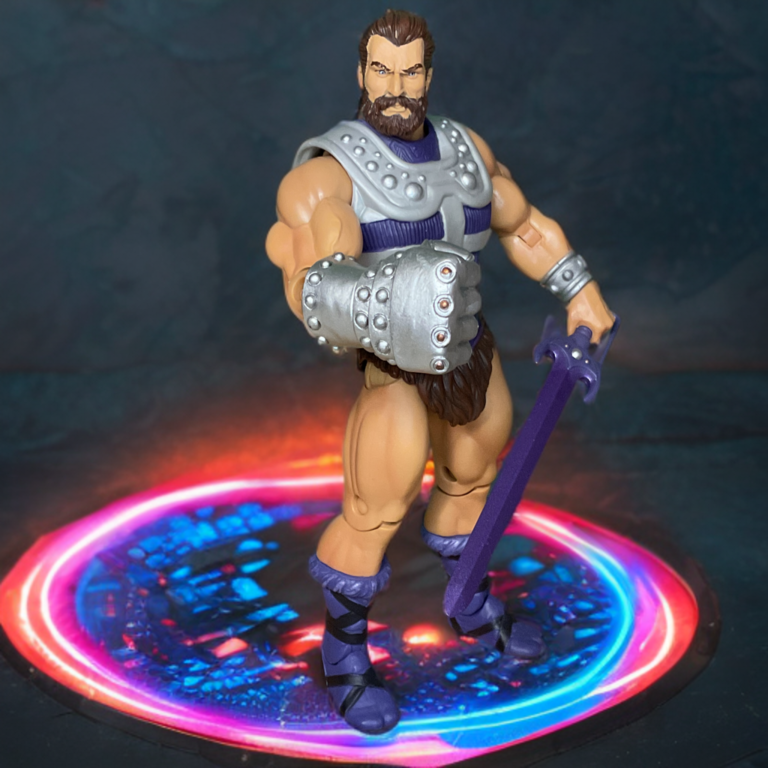
The Modern Tribute: Masters of the Universe Origins (2021)
In 2021, Mattel brought Fisto back to retail pegs via the MOTU Origins line. This version was a milestone for collectors because it finally combined the nostalgic aesthetic of the 1984 “Woodsman” with the articulation required for modern toy photography and display. However, it also marked a significant mechanical departure from the vintage era that every serious collector should note.
Back to Basics (Mostly)
The Origins Fisto is a direct visual recreation of the 1984 figure, prioritizing the “Toy-First” look over the animated media.
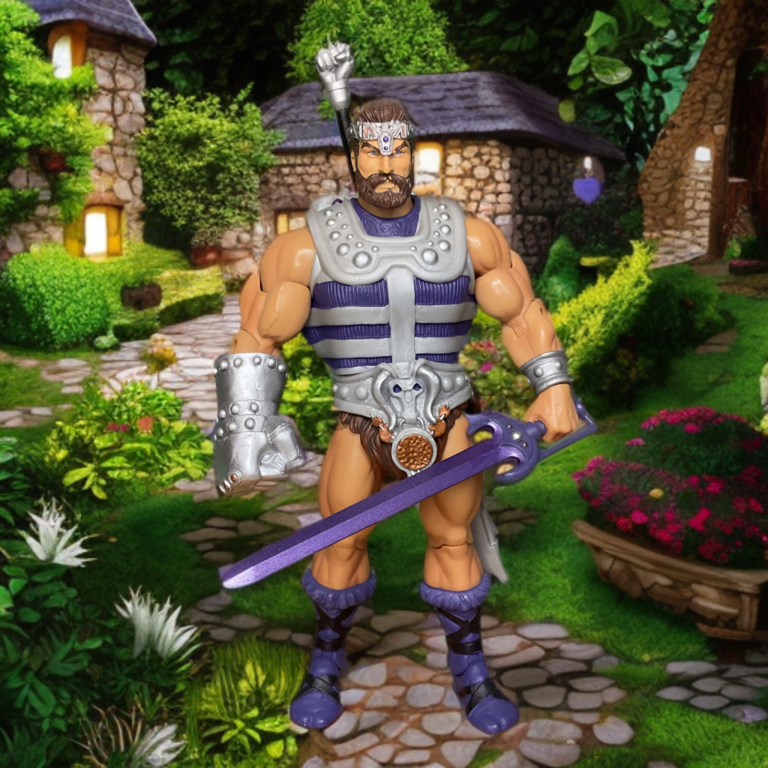
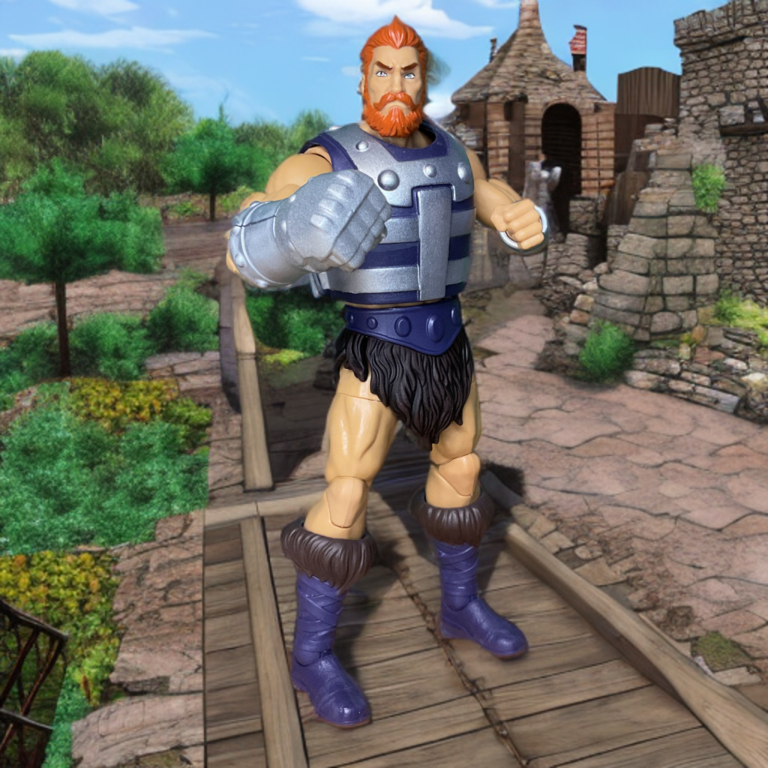
The Headband Debate: Staying true to the original 1984 silhouette, this figure does not wear a headband. It features the classic sculpted hair and thick reddish-brown beard, honoring the rugged “bareheaded” look that fans first saw on cardbacks forty-two years ago.
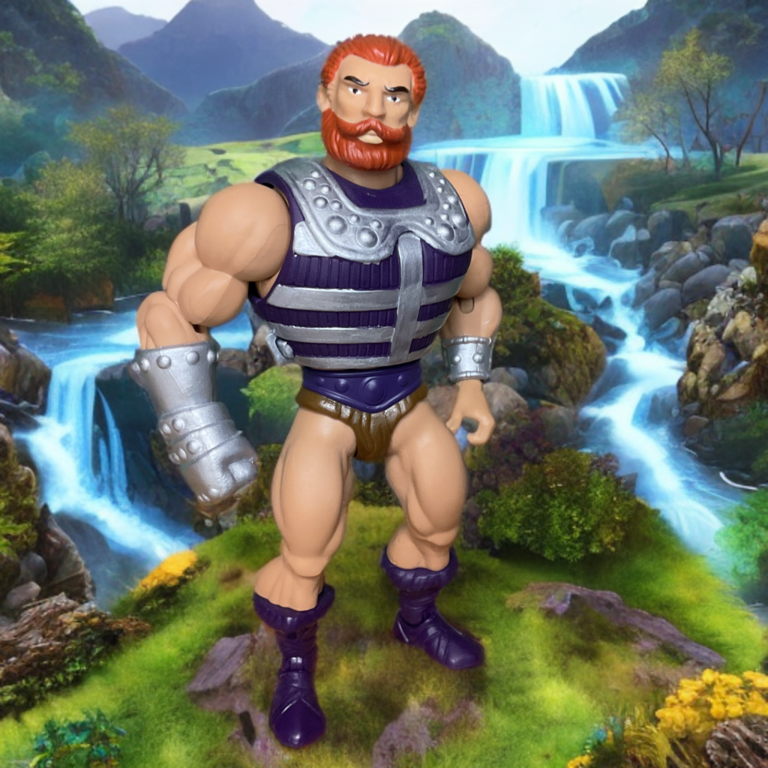
The Fist: While the oversized right hand remains his signature, it is rendered in a much brighter, vacuum-metallized silver than the original. This gives it a premium “chrome” pop that stands out on a shelf, though it lacks any internal mechanical components.
The Gimmick Shift: Unlike the 1984 original, there is no internal spring-loaded mechanism in the Origins version. Mattel removed the “Power Punch” snap-back feature entirely across the line to allow for a modular design. Instead of a spring, the figure relies on 16 points of articulation, allowing you to manually pose his massive fist in mid-strike.
Market Comparison: Origins vs. Vintage
| Feature | 1984 Vintage | 2021 Origins |
| Articulation | 6 Points (Stiff) | 16 Points (Highly Poseable) |
| Gimmick | Internal Spring-Loaded Arm | None (Manual Posing Only) |
| Fist Finish | Dull Grey/Silver Plastic | Shiny Metallic Chrome |
| Waist Action | Spring-Back Twist | Manual 360° Rotation |
The “Modular” Warrior
The defining feature of the Origins line is the ability to swap parts. Every limb and the torso can be popped off and interchanged. For customizers, this meant Fisto’s signature silver hand could finally be placed on other characters, or his rugged head sculpt could be used to create “reformed” versions of other warriors. This modularity is why the waist is not spring-loaded; a spring would prevent the figure from being pulled apart at the midsection for “mix-and-match” play.
Why Origins Fisto Matters
For the “Straightforward Powerhouse,” the Origins release was a validation of his 1984 roots. By stripping away the cybernetic complexities of the 200X era and the “Headband” of the cartoons, Mattel reminded fans that Fisto’s core appeal is his simplicity. Even without the spring-loaded action, he remains the rugged brawler who doesn’t need a crown or a cape—just a solid stance, a heavy hand, and the versatility of modern engineering.
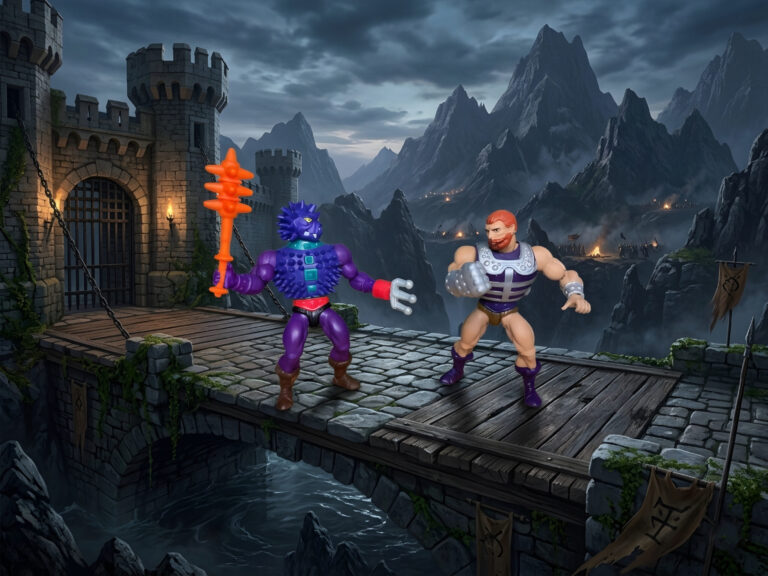
Netflix Masters of the Universe: Revelation (2021)
In the Kevin Smith-led Revelation series, Fisto is reimagined as a grizzled veteran of the Heroic Warriors. This version serves a vital narrative purpose: in a post-cataclysm Eternia where the “Power of Grayskull” has vanished and magic has faltered, Fisto’s purely physical strength becomes more relevant than ever. He represents the “Old Guard” who doesn’t need a magic sword to hold the line.
The Veteran’s Presence
Fisto first appears in the Royal Palace ceremony honoring Teela as the new Man-At-Arms, standing alongside other classic heroes. His design in this series is a high-fidelity evolution of his Filmation/Vintage hybrid look:
The Aesthetic: He features the classic reddish-brown beard—now looking thicker and more “battle-worn”—and wears a dark purple headband. His silver fist is depicted as a heavy, industrial gauntlet that looks integrated into his armor, emphasizing his role as the team’s “Heavy.”
Battle Logic: During the battles against Skelcons and the technological cultists of Motherboard, Fisto serves as the frontline anchor. While others struggle with the loss of mystical abilities, Fisto continues to “dispatch enemies efficiently,” proving that a well-placed punch is an universal constant on Eternia.
The Brotherhood of the Shield
One of the most significant expansions in Revelation is Fisto’s partnership with Clamp Champ.
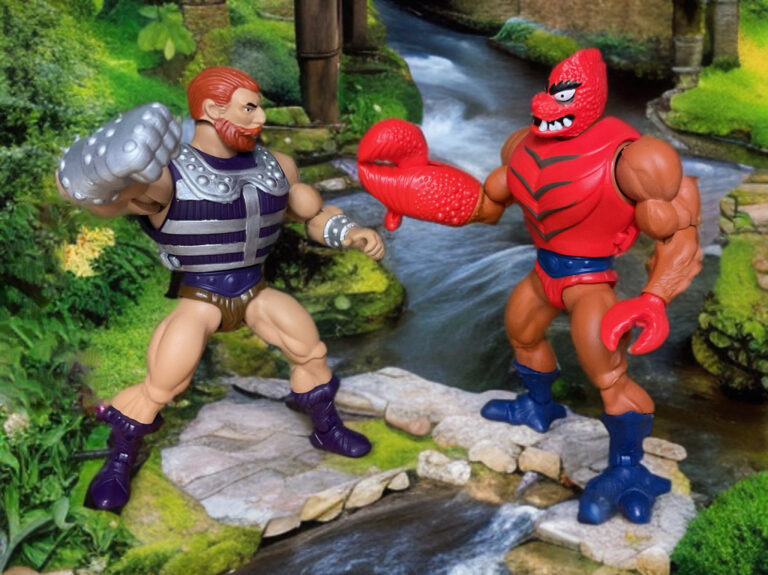
Eternos Evacuation: During the series’ major crises, Fisto and Clamp Champ are frequently paired together to oversee the evacuation of the civilian population of Eternos. This pairing is a nod to their shared status as “Elite Palace Defenders”—the two heaviest hitters in the Royal Guard’s infantry.
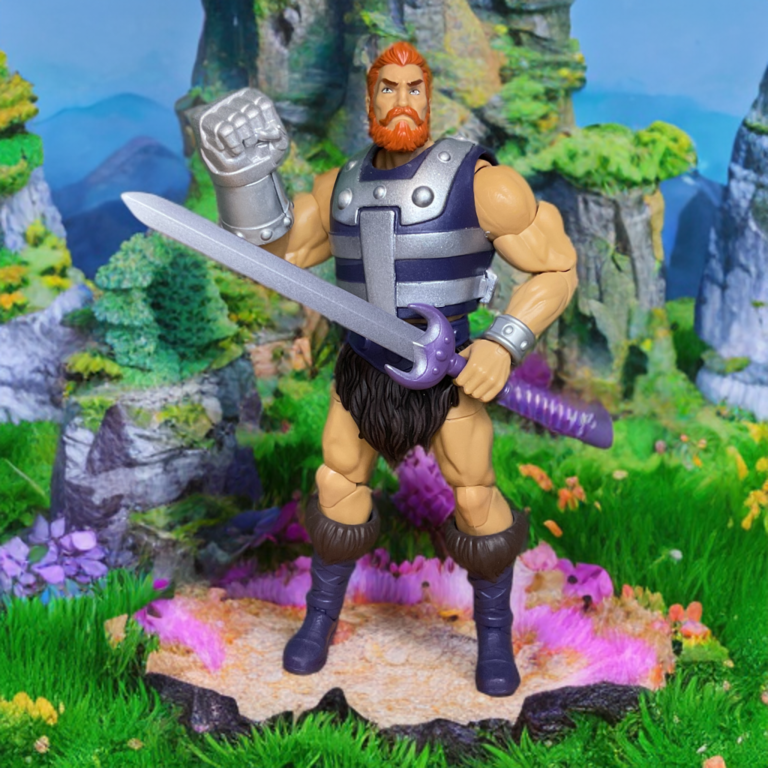
- The Ultimate Sacrifice: In the episode “Cleaved in Twain,” Fisto has a poignant and high-stakes speaking role. Facing an overwhelming assault from a “Skelegod-powered” army, he delivers lines that play on his name with a grim, warrior’s wit. He and Clamp Champ stand their ground against a transformed King Grayskull, embodying the “enduring grit” of defenders who know they are outmatched but refuse to retreat.
Comparison: Revelation vs. Vintage
| Feature | 1984 Vintage | 2021 Revelation |
| Role | Heroic Fighter | Veteran Palace General |
| Headband | None (Bareheaded) | Deep Purple/Maroon |
| Key Ally | Stridor | Clamp Champ |
| Tone | Action-Oriented | Gritty & Self-Sacrificing |
Character Significance in the “Magicless” Era
Even in a darker, more cosmic storyline, Fisto remains the grounded, dependable fighter.
The Practical Hero: While the narrative focuses on the existential threat of a dying universe, Fisto’s presence underscores the human (or Eternian) element of the war. He is the “blue-collar” hero who shows up, takes the hits, and provides the brute force necessary to keep the civilian population safe while the “chosen ones” seek to restore the magic.
Netflix CGI Series: He-Man and the Masters of the Universe (2021)
The 2021 Netflix CGI series, He-Man and the Masters of the Universe, offered the most radical departure for Fisto’s design, leaning into a “Mountain-Man” aesthetic that reimagined his signature weapon as a piece of high-tech, modular machinery.
Netflix CGI Series: He-Man and the Masters of the Universe (2021)
In this reimagined continuity, Fisto (voiced by Trevor Devall) is presented not as a royal guard, but as a rugged, independent survivor living in the frozen heights of the Snowy Peaks. This version of the character emphasizes his “Forest Outcast” roots by placing him in an extreme wilderness environment, where his strength is a matter of daily survival rather than just military duty.
The “Mountain-Man” Reimagining
The Aesthetic: This Fisto is older and more weathered, featuring a massive, unkempt reddish-brown beard and thick winter gear. He retains the signature headband—this time as a practical piece of cold-weather attire—and his overall silhouette is much bulkier to reflect his life in the sub-zero peaks.
The “Fist” as Tech: In this version, the metallic fist is a massive robotic gauntlet that is clearly external technology. It isn’t just a punching tool; it features glowing energy cores (Power of Grayskull integration) and can be used for heavy lifting, climbing, and smashing through solid ice.
The “Iron Fist” Personality: He is portrayed as a gruff mentor figure, initially reluctant to join the new generation of Masters. His “straightforward” nature is dialed up to a “curmudgeonly” level, providing a grounded contrast to the youthful energy of the show’s main cast.
Combat and Utility
In the CGI series, Fisto’s role as a “Tank” is literal. He is often shown absorbing massive amounts of damage that would sideline other heroes.
Seismic Strikes: His gauntlet can strike the ground to create localized tremors, a “Power Punch” evolution that turns his hand-to-hand specialty into a literal area-of-effect weapon.
The Solo Survivor: Unlike the Revelation version who works closely with the Palace Guard, this Fisto is a loner who has mastered his environment. When he finally joins the Heroic Warriors, he brings a “survivalist” tactical edge that the more pampered heroes lack.
Comparison: CGI vs. Vintage
| Feature | 1984 Vintage | 2021 CGI Series |
| Location | Forests of Eternia | Snowy Peaks |
| Personality | Heroic Fighter | Gruff Mountain Survivor |
| Fist Design | Sleek Silver Hand | Heavy Robotic Gauntlet |
| Headgear | None (Bareheaded) | Functional Winter Headband |
Final Summary: The Reliable Force
Across 42 years, Fisto has evolved from a simple spring-loaded toy into a multi-generational icon of grit and reliability. Whether he is a bareheaded woodsman in 1984, a cybernetic soldier in 2002, or a grizzled veteran in 2021, his core remains the same: he is the hero who shows up, handles the heavy lifting, and proves that sometimes the best solution to a cosmic problem is a well-placed, high-impact punch.
The Ultimate Evolution: New Eternia Masterverse Fisto (2024)
In 2024, the “New Eternia” sub-line of Masterverse delivered what many consider the most formidable version of the character to date. This 7-inch scale figure moves away from the “toy-accurate” simplicity of Origins and leans into a “Battle-Hardened General” aesthetic, providing a massive array of accessories that redefine the “Straightforward Powerhouse.”
The “Multiverse” Concept
New Eternia Fisto is inspired by original 1980s concept art and the “Forest Outcast” lore.
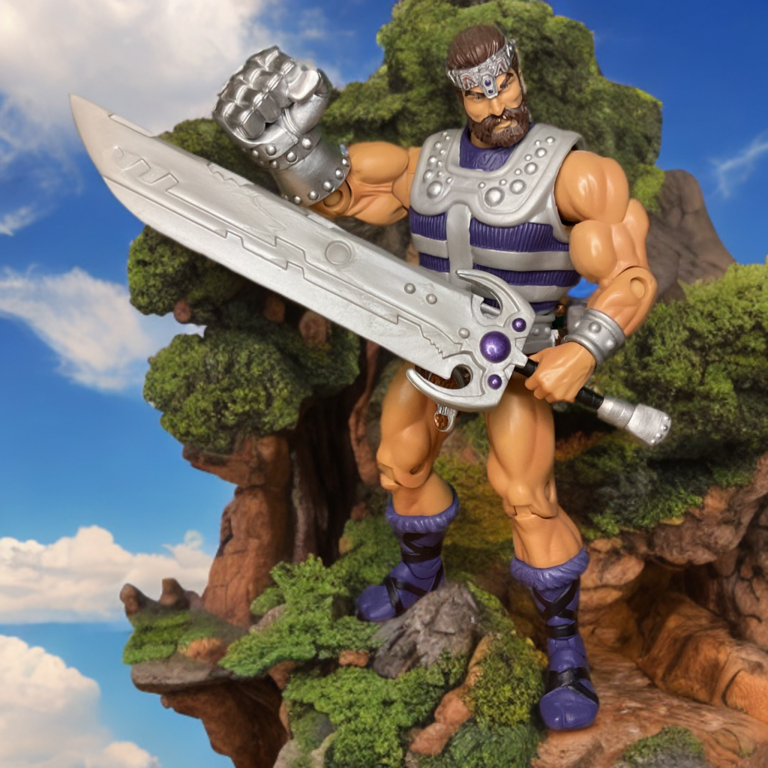
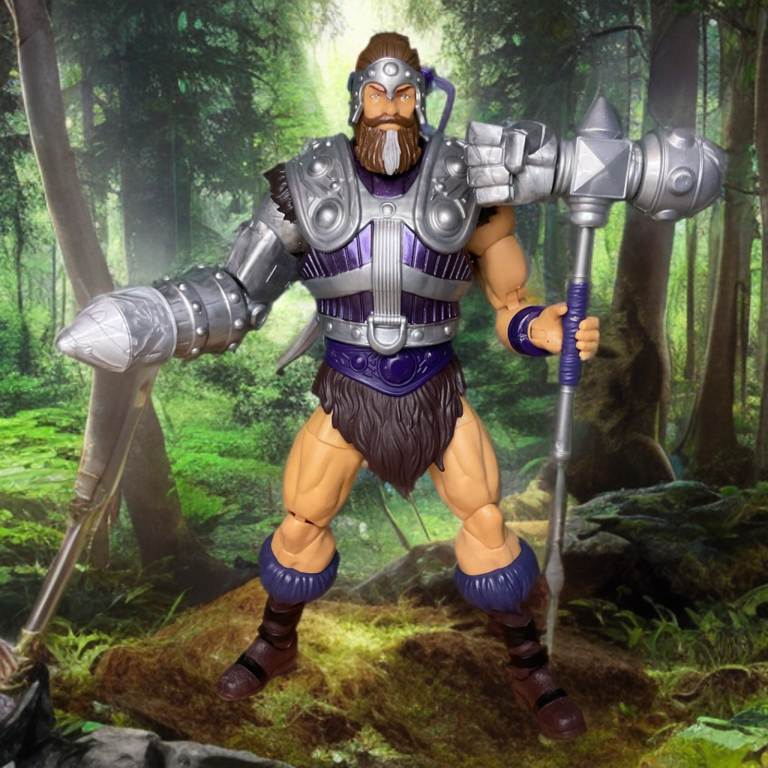
The Headband Returns (Optionally): Unlike the 1984 and Origins versions, this Fisto features a sculpted headband in a deep purple/maroon. It bridges the gap between the vintage toy and the Filmation/200X appearances, giving him a more “seasoned warrior” look.
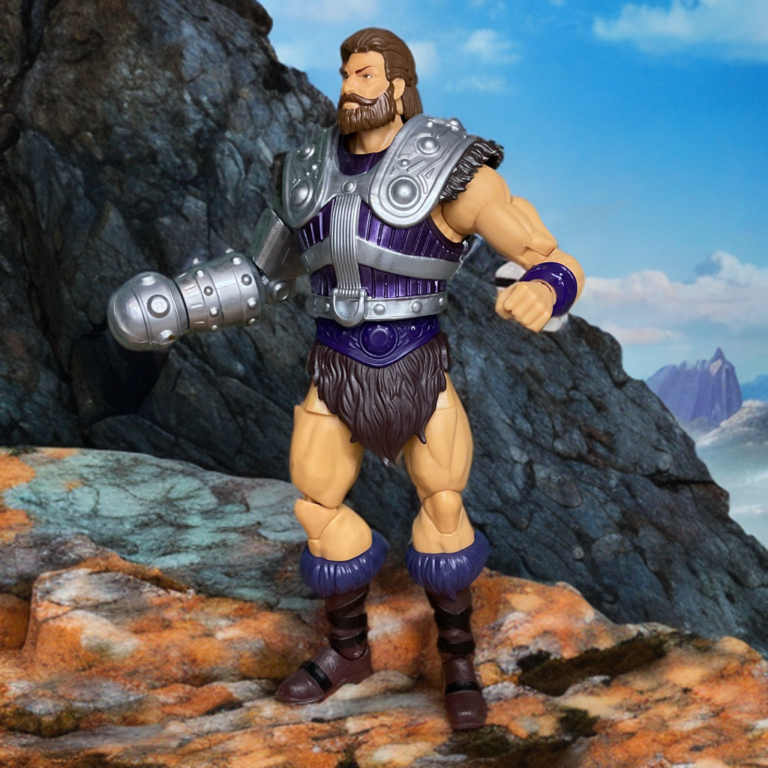
The “Fist” Versatility: In a first for the character, the right hand is swappable. You can display him with the iconic oversized metallic fist or a standard “gloved” hand, allowing him to hold weaponry in both hands for the first time in history.
The Armor: He features removable metallic chest armor that is significantly more detailed than the 1984 original, with weathered textures and a “heavy cavalry” feel that aligns with his role as a frontline breaker.
An Expanded Arsenal
New Eternia Fisto isn’t just a hand-to-hand fighter; he’s a walking armory.
The Two-Headed Hammer: This is the standout addition. He comes with a massive metallic hammer featuring a dual-head design—one end is rounded for blunt-force crushing, and the other is pointed for piercing enemy armor. This leans into his “Mechanical Specialist” role, giving him a tool for every tactical obstacle.
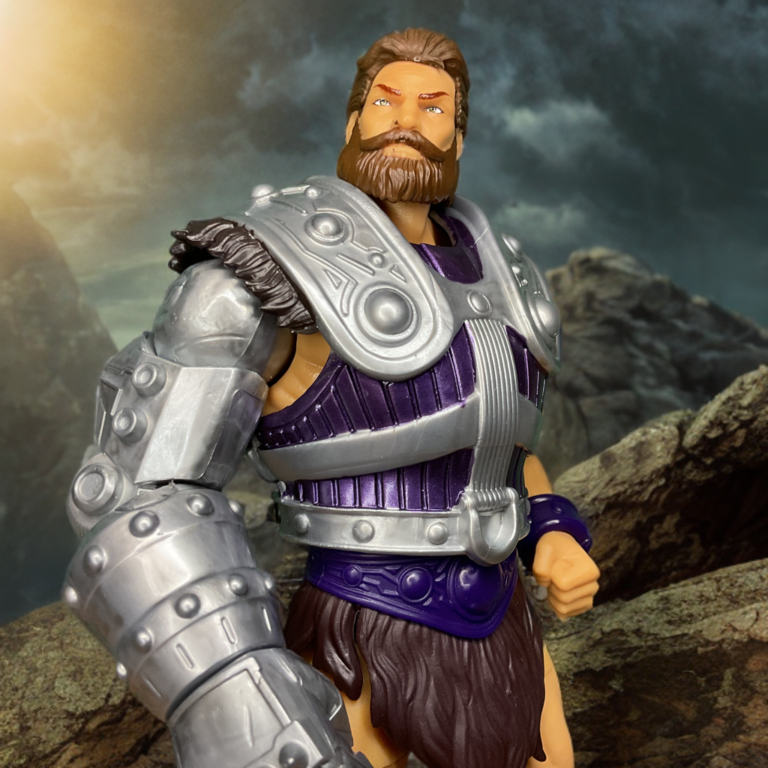
- The Sword: He retains a purple-hued broadsword, but it is scaled to the 7-inch Masterverse proportions and features a much more realistic, “forged” appearance compared to the 1984 “Purple Saber.”
New Eternia Comparison: The Powerhouse Reborn
| Feature | 1984 Vintage | 2024 New Eternia |
| Scale | 5.5 Inches | 7 Inches |
| Headgear | None (Bareheaded) | Sculpted Purple Headband |
| Right Hand | Fixed Metal Fist | Swappable (Fist or Standard) |
| Weaponry | Sword Only | Sword + Two-Headed Hammer |
| Articulation | 6 Points | 30+ Points |
Why New Eternia Matters
This version of Fisto represents the “Grown Up” version of the 1984 hero. By including the hammer and the swappable hand, Mattel acknowledges that while he is a “Straightforward Powerhouse,” a veteran of Eternia’s wars would be tactically versatile. He remains a “no-nonsense” hero, but now he has the heavy-duty gear to match his reputation as the “Tank” of the Heroic Warriors.
The Reliable Force
Across decades and continuities, Fisto consistently represents straightforward strength and redemption. He starts as an outsider or outcast in many versions—whether a forest enforcer, an accused deserter, or an amnesiac miner—and earns his place through actions rather than destiny. His metallic fist solves problems that magic or technology alone cannot: breaking through walls, smashing barriers, or delivering decisive blows. While He-Man handles the epic destiny and Man-At-Arms engineers solutions, Fisto shows up, handles the heavy lifting, and gets the job done. In a franchise full of larger-than-life figures, he proves that sometimes the most effective hero is the one who doesn’t overcomplicate things—just points his fist at the problem and swings. Collectors and fans alike recognize him as the ultimate blue-collar warrior of Eternia, deserving of his spot on any shelf (just mind the spring-loaded arm if you’re posing him for a high-five).