
Kings of the Masters of the Universe Knock-Offs
The 1980s action figure boom, spearheaded by Mattel’s Masters of the Universe (MOTU) in 1982, transformed the toy industry by proving that larger, more muscular figures could dominate shelves and capture children’s imaginations in ways smaller lines like the 3.75-inch Star Wars figures could not. At the heart of MOTU’s success—and the knock-offs it inspired—was the deliberate choice of the 5.5-inch (approximately 14 cm) scale, a “Goldilocks” size that struck an ideal balance for both play and production economics.
This scale was larger than the pocket-sized 3.75-inch figures dominant in the late 1970s/early 1980s (Star Wars, G.I. Joe), allowing for more exaggerated, heroic proportions—broad shoulders, bulging muscles, oversized weapons, and dynamic battle-ready poses—that evoked comic-book fantasy heroes and appealed to children’s psychology. The beefier, more imposing physique subconsciously conveyed power and intimidation, making kids feel like they were commanding epic warriors rather than tiny soldiers. It encouraged imaginative, storytelling play: figures could “bulk up” for battle, swap armor/weapons easily, and create sprawling armies without overwhelming shelf space or parental budgets (retail prices hovered around $4–$6 per figure, affordable for allowance money).
Table of Contents
- Remco’s Warrior Beasts (1982–1983)
- Remco’s Lost World of the Warlord (1982)
- Remco’s Conan the Barbarian (1984)
- Remco’s Pirates of the Galaxseas (1983)
- Zoloworld’s Realm of the Underworld
- Formo Toys Legends of Dragonore
- Formo Toys Warriors of the Galaxy
- Sungold’s Galaxy Warriors (1983)
- Galaxy Fighters (Sewco, 1984–1985)
- Speclatron (S&T Sales, 1983–1984)
- Funko’s Savage World & Related Lines
From an engineering and economic standpoint, the 5.5-inch size enabled massive cost-saving through mold reuse and parts sharing—a strategy Mattel pioneered and knock-off makers perfected. Early MOTU waves relied on just a handful of core body molds (e.g., two chest types, one shorts/pelvis, three arm/leg sets in 1982), mixed-and-matched in different colors, paints, and heads to create variety without expensive new tooling. Accessories (swords, shields, harnesses) were similarly repurposed across figures, reducing R&D and manufacturing costs while maximizing profit margins in a high-volume market. This “Lego-like” modularity—interchangeable parts, ball-jointed limbs (often with rubber-band waists for twisting), and grip hands—also boosted play value: kids could customize, repair, or combine figures endlessly.
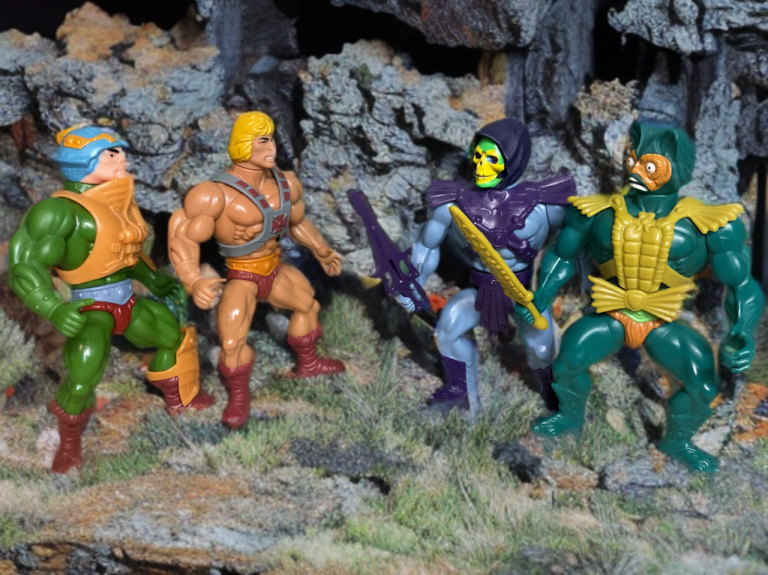
Knock-off manufacturers, especially in Hong Kong (Sungold, Sewco, S&T Sales), took this blueprint to extremes. With lower overhead and no licensing fees, they reused or closely copied Mattel’s body molds (often sourcing similar tooling or reverse-engineering), slapped on new heads/sculpts (soft rubber for lifelike feel), and added gimmicks or themes to differentiate—while keeping the exact scale for compatibility. This allowed blatant copies to hit shelves faster and cheaper, flooding discount stores with army-builders that parents could buy in bulk without breaking the bank. The psychology worked in reverse too: kids got the “real” experience (muscle poses, battles) at a fraction of the cost, while collectors today prize the variants born from these shortcuts.
Some knock-offs were shameless duplicates; others layered fresh identities through character design (e.g., Remco’s DC-licensed Warlord realism or pirate-space twists), wild packaging art, or unique play features (glitter torsos, translucent parts). Yet a select few rose above as true kings through superior quality, creativity, mold innovation, and flawless compatibility with MOTU—proving that smart engineering and economic savvy could turn imitation into something enduring and collectible.
These are the kings.
1. Remco’s Warrior Beasts (1982–1983)
Remco’s Warrior Beasts reign supreme. Launched as the villainous counterpart to the company’s Lost World of the Warlord line, they quickly earned a reputation as the gold standard of MOTU knock-offs thanks to their wild monster heads grafted onto classic 5.5-inch bodies, generous accessories, and perfect scale match.
Figures included Skullman (two distinct versions—the first with a Skeletor-esque hooded skull, the second a larger bare skull after possible legal pressure), Wolf Warrior, Craven, Guana, Stegos, Gecko (purple and green/yellow variants), Snakeman, Hydraz, Zardus, and Ramar with his Fire Dragon mount.

Many came carded or in “Beast Team” two-packs with the impressive Fire Dragon steeds (molded from Imperial toys’ dinosaur molds). Small production variants abound: different belt styles, cape colors on Skullman, and color shifts on several figures.
Collectors prize them for the sheer variety of beastly sculpts—lizard men, bird men, wolf men, snake men—paired with the same crouched, battle-ready stance that made MOTU so fun to pose. The line played beautifully alongside He-Man, Skeletor, and the rest, and its enduring popularity is evident in modern aftermarket prices and the fact that Zoloworld later revived the aesthetic.
Remco’s Warrior Beasts (1982–1983) Prices
These remain among the most sought-after vintage knock-offs.
- Loose common figures (e.g., Snakeman, Stegos, Craven, Gecko): $50–$150 (often $75–$100 for good condition with basic accessories).
- Rarer ones (e.g., Wolf Warrior, original Skullman variants): $150–$300+.
- High-end loose Skullman or complete beasts: $200–$500.
- Carded/MOC or rare variants: $300–$800+ (e.g., some two-packs or exclusives).
- Zoloworld modern Warrior Beasts revivals (e.g., Shadow Wolf package sample MOC, exclusives): $50–$120 new/low-production.
Check out our full and updated Warrior Beasts Price Guide.
2. Remco’s Lost World of the Warlord (1982)
Released in the same pivotal year as Warrior Beasts, Remco’s Lost World of the Warlord was the company’s flagship licensed effort—a direct tie-in to DC Comics’ popular sword-and-sorcery series The Warlord, created, written, and illustrated by Mike Grell. The comic, which debuted in 1975 (1st Issue Special #8) and ran its own title starting in 1976, followed pilot Travis Morgan (the Warlord) crashing into the hidden prehistoric world of Skartaris, filled with dinosaurs, barbarians, magic, and ancient civilizations. Grell’s run (through issue #59 writing/art, extending influence further) gave the character a grounded, realistic edge amid high fantasy, which Remco translated into toys with slightly more lifelike proportions and detailing compared to pure fantasy knock-offs.
The line used the exact same 5.5-inch body molds as Warrior Beasts—crouched battle stance, twisting waist, ball-jointed shoulders/hips, and grip hands—for seamless compatibility with Masters of the Universe, Blackstar, and other contemporary 5½-inch figures. Cardbacks explicitly boasted this cross-play appeal, positioning the heroes as instant additions to Eternian armies or rivals to Skeletor’s forces.
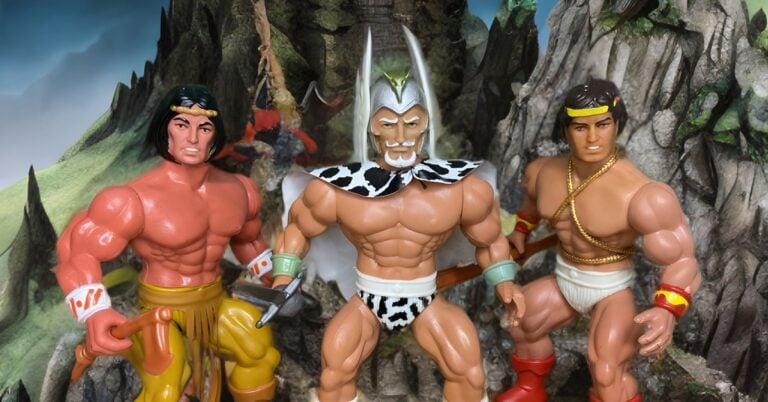
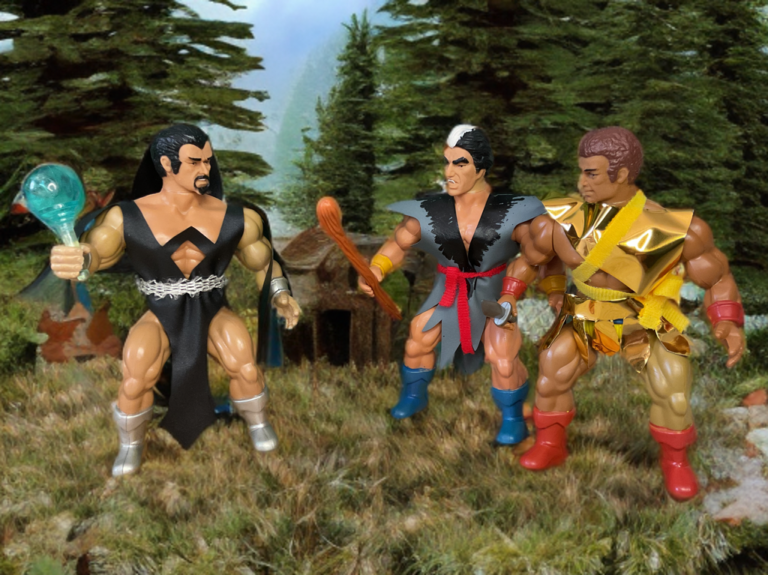
Core Figures and Variants The series focused on key characters from the comics, with a handful of cross-DC inclusions for variety:
- The Warlord (Travis Morgan): The flagship hero, often with sword, shield, and cape; multiple minor paint/strap variations exist.
- Deimos: The demonic sorcerer villain, a standout with dark armor and mystical accessories.
- Machiste: One-armed warrior ally (his missing arm sculpted in), with sword and rugged detailing.
- Mikola Rostov (werewolf variant): Transformed werewolf form; variants include slight fur/paint differences.
- Arak Son of Thunder: Two main variants—one with brown loincloth and white/brown bracelets, the other with brown vest and yellow bracelets—for added collectibility.
- Hercules: Borrowed from DC’s broader mythos (not Marvel’s version), muscular and heroic with club or sword.
Some sources note additional or catalog-teased figures, but the confirmed singles hover around these six, emphasizing quality over quantity.
Accessories and Vehicles Remco loaded these figures generously: swords, shields, capes, belts, and sometimes axes or other weapons. The real play value came from the vehicles and sets:
- Mighty Stallion Warteam sets: Horses (reusing molds, often in different colors) paired with riders (e.g., Warlord or others) for mounted battles; these are highly sought after.
- Warpult catapult: Available in light and dark colorways, a sturdy siege weapon with launching action.
- Journey Through Time playset: The rarest item—a cardboard-backed diorama with catapult elements, multiple weapons, accessories, and a standup backdrop; it’s notoriously hard to find complete due to low production and fragile packaging.
Collector Appeal and Legacy The sculpts lean more realistic and comic-accurate than the monster-heavy Warrior Beasts—think detailed facial hair, period-appropriate armor, and less exaggerated musculature—while retaining the same poseable engineering that makes them “heavy rotation” favorites. Many collectors mix them with MOTU for hybrid armies, using Warlord as a He-Man ally or Deimos as a Skeletor lieutenant. The DC license added legitimacy, but the line’s short run and overlap with Remco’s unlicensed lines kept it somewhat under-the-radar compared to bigger brands.
Market Prices (approximate, based on recent sales)
- Loose common figures (e.g., Warlord, Machiste, Hercules): $50–$150 (often $70–$100 complete with cape/sword).
- Variants (e.g., Arak loincloth vs. vest, Mikola werewolf tweaks): Add $20–$50 premium.
- Rarer figures (e.g., Deimos complete): $100–$250.
- Vehicles/Warteams (e.g., Mighty Stallion with rider): $200–$650+ (recent examples hit $650 for complete sets).
- Warpult catapult (boxed/MIB): $150–$400.
- Journey Through Time playset (complete/rare): $300–$800+ (one of the tougher vintage Remco grails).
- Carded/MOC figures: $80–$300+ (e.g., Arak carded ~$80–$140, Warlord MOC higher in $200 range with condition issues like yellowing bubbles).
This line showcases Remco at their peak: smart licensing, mold reuse for efficiency, and bold compatibility claims that turned knock-off engineering into a strength. It’s a bridge between pure fantasy MOTU clones and licensed properties, making it essential for any deep 5.5-inch collection.
Remco’s Lost World of the Warlord (1982) Prices
Similar pricing to Warrior Beasts due to shared molds.
- Loose common (e.g., Warlord, Machiste): $50–$150.
- Rarer (e.g., variants or vehicles like Mighty Stallion Warteam): $200–$650+ (e.g., complete horse/rider sets hit $650 in recent listings).
- Carded or playsets: Higher, often $300+.
3. Remco’s Conan the Barbarian (1984)
By 1984, Remco had honed their 5.5-inch action figure formula to its sharpest edge, producing a line that felt like the closest spiritual successor to Masters of the Universe without the official license. The Conan the Barbarian series drew inspiration more from the Marvel Comics adaptation (written by Roy Thomas and others, with art by John Buscema and others) than the 1982 Arnold Schwarzenegger film, resulting in a gritty, sword-and-sorcery vibe that leaned heavily into barbarian fantasy while retaining Remco’s signature crouched battle stance, twisting waists, ball-jointed limbs, and grip hands for full MOTU compatibility.
The line was short-lived—likely due to licensing constraints or market saturation—but packed with bold designs, vibrant (sometimes translucent) plastic, and accessories that gave each figure strong play value and display appeal. It consisted of exactly five core figures, each carded individually with dramatic comic-style artwork and the tagline emphasizing adventure and conquest.
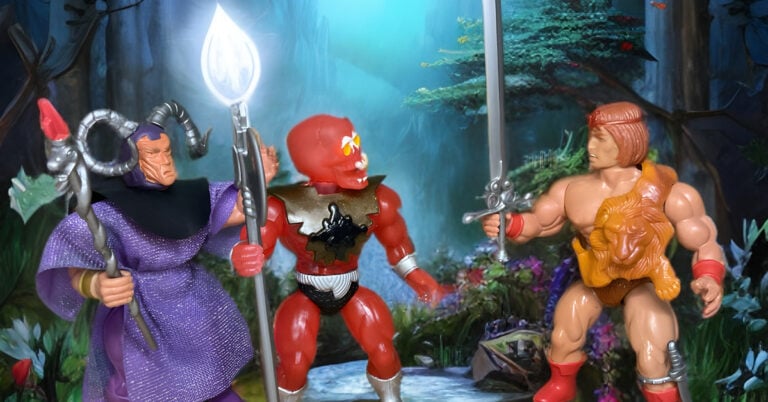
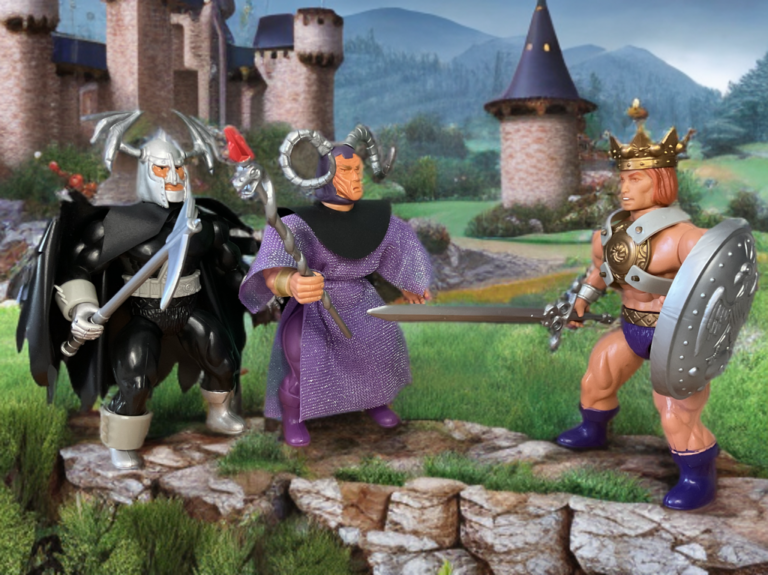
Core Figures and Standouts
- Conan the Warrior (#28): The heroic centerpiece, muscular barbarian with fur loincloth, belt, and sword; often in classic Conan red/orange tones. The sculpt is so MOTU-like (broad shoulders, dynamic pose) that loose examples frequently get mistaken for custom He-Man figures or bootlegs.
- Conan the King (#27): A crowned, regal variant of Conan (depicting him as ruler of Aquilonia from the comics), with added cape, crown/helmet elements, and more ornate armor details for a “kingly” upgrade.
- Thoth-Amon (#29): The iconic sorcerer villain from the Conan mythos, complete with hooded robe, staff, and mystical accessories. One of the few Thoth-Amon figures ever produced in any toy line, making it a highlight for Conan fans.
- Devourer of Souls (#30): A monstrous demonic entity with exaggerated features, dark coloring, and terrifying accessories—perfect as a big bad for crossover battles.
- Jewel Thief (#31): The most visually striking and collector-beloved entry—a fully translucent red skeleton warrior (sometimes called “Red Jewel Thief” or simply “Skeleton”). This figure’s eerie, glowing-in-light plastic body, combined with bone sculpt and weapons, makes it one of the most unique and eye-catching 5.5-inch figures of the era. It’s often cited as a “what if Remco made a MOTU-style undead minion?” standout.
Accessories, Vehicles, and Playsets Each figure shipped with multiple weapons (swords, axes, daggers), belts, and sometimes capes or armor pieces—Remco’s generous accessory packs were a hallmark. The line expanded with vehicles and sets for added play:
- Combat Chariot: A rugged, spiked-wheel chariot pulled by a hulking reptilian monster (a dragon-like beast with gaping jaws and claws). This set evoked Howard’s savage Hyborian Age battles and was designed for dramatic charges. It appeared in U.S. carded/window-box packaging and saw some foreign releases (e.g., in France by Delavennat, sometimes bundled with a Mikola Rostov figure from the Lost World line).
- Monster playset (or standalone Monster): A bagged or boxed individual monster (similar to the chariot-puller), usable as a mount or standalone foe. These are rarer and add siege/monster-riding fun to mixed MOTU armies.
No large-scale playsets like the Warlord’s Journey Through Time are confirmed for this line, but the vehicles provided solid expansion potential.
Collector Appeal and Legacy The molds’ proximity to MOTU bodies (especially the He-Man-esque torsos and legs) gives these figures incredible crossover potential—Conan the Warrior or King slots right in as a heroic barbarian ally, Thoth-Amon as a dark sorcerer rival to Skeletor, and the Jewel Thief as a standout translucent undead troop. The bold primary colors, comic-accurate details, and innovative translucent plastic give the line a distinct “what if He-Man had been Conan” energy that sets it apart from Remco’s earlier, more grounded Warlord series. Though production was brief (likely impacted by the post-MOTU boom slowdown), the figures’ scarcity, quality, and Conan IP tie-in make them highly prized in KO and vintage collecting circles.
Current Market Prices (approximate, based on recent 2025–2026 sales)
- Loose common figures (e.g., Conan the Warrior, Conan the King): $80–$200 (often $100–$150 complete with sword/belt; good condition pushes higher).
- Thoth-Amon or Devourer of Souls loose: $100–$250 (rarer villains command premiums).
- Jewel Thief loose (translucent red skeleton): $150–$400+ (one of the pricier commons due to visual appeal and demand; complete with accessories higher).
- Vehicles (e.g., Combat Chariot with monster, loose or boxed): $200–$500+ (foreign releases or complete sets can hit $400–$600).
- Carded/MOC figures: $150–$600+ (e.g., Conan the Warrior carded ~$200–$300, Thoth-Amon MOC or sealed examples $300–$500, Jewel Thief carded rare and pushing $1,000–$2,000 in top condition based on past high sales).
The Conan line represents Remco’s most refined take on the 5.5-inch formula—polished, thematic, and instantly compatible—making it a must-have for collectors chasing the pinnacle of MOTU knock-offs.
Remco’s Conan the Barbarian (1984) Prices
Slightly scarcer than the earlier Remco lines.
- Loose figures (e.g., Conan variants, Thoth-Amon): $100–$300.
- Standouts like Jewel Thief (translucent red skeleton): $200–$500+.
- Vehicles/playsets: $200–$400+.
4. Remco’s Pirates of the Galaxseas (1983)
Remco’s Pirates of the Galaxseas was another inventive entry in their prolific run of 5.5-inch action figure lines, launched in 1983 as a direct companion to Warrior Beasts, Lost World of the Warlord, and the upcoming Conan series. Sharing the identical body molds—crouched battle-ready stance, twisting waist, ball-jointed shoulders/hips, and grip hands—the figures offered perfect scale and poseability compatibility with Masters of the Universe, Blackstar, and other contemporary 5½-inch toys. Cardbacks likely highlighted this cross-play feature, though surviving examples are scarce.

The theme fused classic pirate tropes (eye patches, hooks, peg legs, cutlasses) with a sci-fi/fantasy “galaxseas” twist—space-faring buccaneers raiding cosmic treasures—creating a unique flavor that feels like pirate raiders invading Eternia. Production was brief (only one wave confirmed), contributing to its relative scarcity compared to Remco’s more prolific lines like Warrior Beasts or Galaxy Warriors knock-offs.
Core Figures Only six figures were released, each carded individually with vibrant, adventurous artwork and the signature Remco accessory generosity:
- Patch (#1): Eyepatch-wearing leader, often with hook hand, sword, and rugged pirate detailing; sometimes described as a “badass Santa Claus” vibe due to his beard and build.
- Tattoo (#4): Heavily inked brute with muscular sculpt and aggressive pose; a fan favorite for his bold design and no-mercy attitude.
- Pegleg (or Peg Leg): Wooden-legged pirate with peg leg accessory, dagger/sword, and tough-guy sculpt; variants include silver or black weapons.
- Cutlass: Sword-wielding swashbuckler with classic pirate flair; one of the more “standard” heroic/villainous pirates in the set.
- Crossbones: Skeleton pirate in one color scheme (often white/gray bones with accents), reusing a bone-head sculpt similar to Warrior Beasts’ Skullman but with a full skeletal body for a unique undead pirate look.
- Ribs (or Saw Bone Marauder): Contrasting skeleton variant (darker or differently painted bones), emphasizing the line’s standout “skeleton crew” appeal—perfect as ghostly space pirates or MOTU undead troops.
The two skeletons (Crossbones and Ribs) are widely regarded as the coolest entries, with full bone bodies that evoke stop-motion Harryhausen skeletons while fitting seamlessly into 5.5-inch fantasy armies.
Accessories and Packaging
Each figure included a “Pirate Treasure” coin (gold or silver, depicting one of the six characters—randomly matched, not figure-specific), plus color-coordinated weapons: silver weapons paired with silver coins, black weapons with gold. Accessories typically featured hooks, peg legs, swords, daggers, cutlasses, and sometimes belts or other pirate gear. Rumors from Remco’s 1983 Toy Fair catalog suggest two unproduced playsets (possibly ships or treasure islands), but no photos or examples have ever surfaced, adding to the line’s mystique.
Collector Appeal and Legacy
Pirates of the Galaxseas stands out for Remco’s creative mold reuse: the same bodies got pirate-themed heads, limbs, and accessories, delivering fresh play without new tooling. The skeletons are especially prized for army-building—undead pirates make excellent crossover minions for Skeletor or evil forces. The short run and niche theme keep it somewhat under-the-radar compared to Remco’s bigger hits, but demand is steady among KO completists and those chasing unique 1980s fantasy variants. Zoloworld has kept the spirit alive with modern homages, notably the Ribs figure (and variants like Shreds/Ghastly Ribs or Swashbuckler), using updated carded packaging and limited editions to evoke the originals.
Remco’s Pirates of the Galaxseas (1983) Prices
This Remco line shares the same 5.5-inch body molds and compatibility as their Warrior Beasts, Lost World, and Conan series, but its pirate-space theme and short production run make it scarcer overall. The six figures (Patch, Tattoo, Pegleg, Cutlass, Crossbones, Ribs/Saw Bone Marauder) often feature unique accessories like treasure coins (gold or silver), hooks, peg legs, and color-matched weapons. Skeletons like Crossbones and Ribs are particularly chase-worthy due to their bone sculpts and paint apps.
Prices reflect its rarity compared to more common Remco lines like Galaxy Warriors, but lower than ultra-grails like Speclatron Dethlor.
- Loose common figures (e.g., Tattoo, Pegleg, Cutlass, Patch): $40–$100 (often $50–$80 for good condition with coin/weapon; some recent sales around $40–$60 for basic ones).
- Rarer or standout figures (e.g., Crossbones or Ribs skeleton variants): $100–$250+ (e.g., loose Ribs or Crossbones frequently $150–$200 in solid shape).
- High-end loose complete (with all accessories/coin): $80–$300 depending on figure and condition.
- Carded/MOC or sealed (e.g., Patch NIP, Crossbones sealed rare): $200–$500+ (recent examples include sealed Crossbones around $490, carded Pegleg ~$80–$150, Tattoo MOC higher in the $200+ range).
- Zoloworld modern homages/revivals (e.g., RIBS MOC figure): $30–$40 (standard retail ~$29.99–$39.99 new/pre-order; limited editions may edge higher).
The line’s short run and Remco quality keep demand steady among KO collectors, especially for army-building with the skeletons as undead pirates. Loose figures are more attainable than many other vintage Remco entries, but complete carded examples push into premium territory.
5. Zoloworld’s Realm of the Underworld
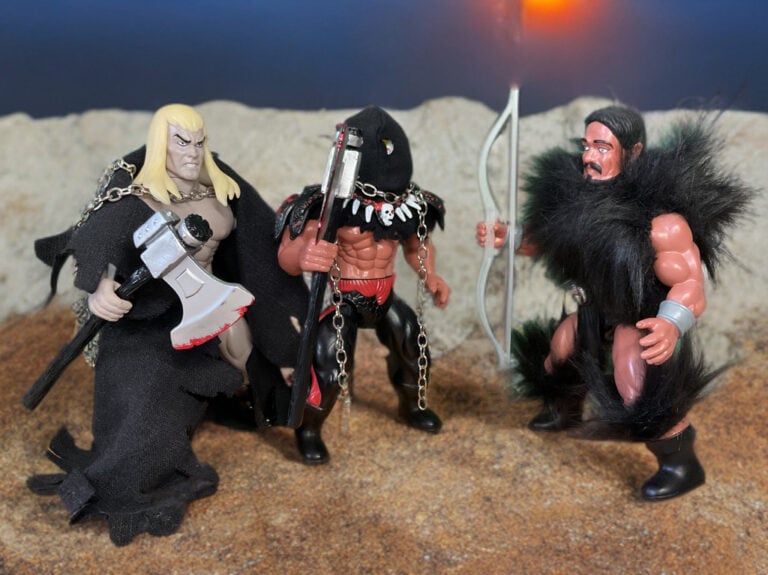
Zoloworld’s Realm of the Underworld (ROTU) is the definitive modern spiritual successor and direct extension of the Remco Warrior Beasts aesthetic, breathing new life into the 5.5-inch monster-fantasy format that defined 1980s knock-offs. Launched around 2012–2013 by Michael Zolotorow (Zoloworld’s founder and a longtime collector/creator), the line revives the classic crouched battle stance, interchangeable parts, generous accessories, and beastly/undead monster designs that made Remco’s originals legendary—while adding contemporary upgrades like improved articulation (often tighter joints and more points), glow-in-the-dark elements, translucent plastic variants, metallic paints, cloth goods, and convention-exclusive treatments.
The figures are engineered for full backward compatibility with vintage Masters of the Universe, Remco Warrior Beasts/Lost World/Conan/Pirates bodies, and most other 5.5-inch lines—heads, armor, weapons, and hands swap seamlessly, making ROTU the ideal way to expand or customize older armies. Packaging faithfully recreates 1980s carded style: bold comic-book art, character bios on the back, and the “5.5 inch action figure” scale callout, often with nods to Remco’s legacy (e.g., Mike Grell-inspired backers for some figures).
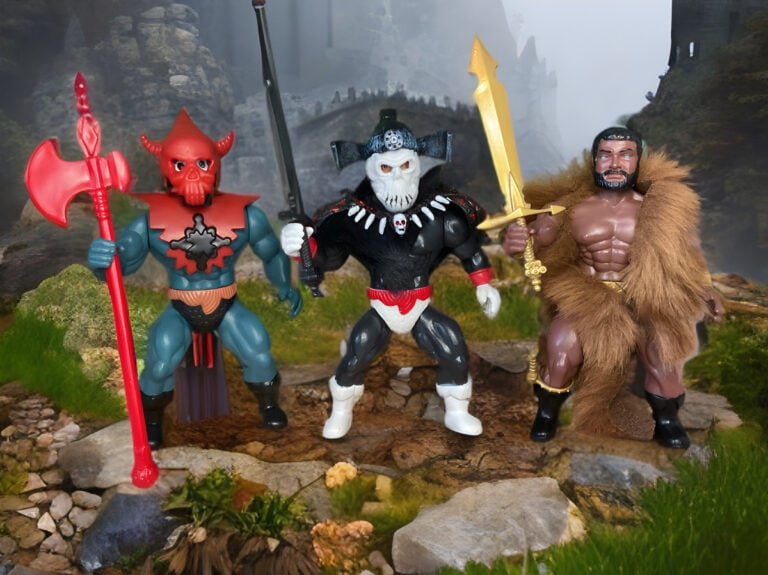
History and Evolution
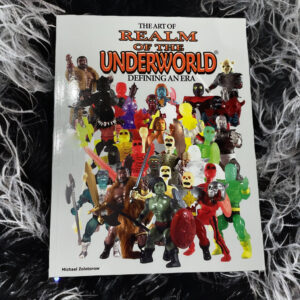
ROTU began as a passion project to fill the void left by Remco’s abrupt end in the mid-1980s, starting with early waves featuring skeleton warriors, beasts, and dark lords. It has steadily expanded through waves, split releases, battle teams (rider + mount sets), limited editions, and web exclusives. Production remains boutique and limited-run (“Vault” editions often sell out fast), with ongoing drops via zoloworld.com and conventions like Power-Con. A comprehensive 180-page hardcover book, “Realm of the Underworld: Defining an Era“ (by Michael Zolotorow), serves as the ultimate collector guide, covering figure variations, lore, art, and history.
Key Releases and Standouts
The line boasts over 35 unique figures (plus variants, battle teams, and accessories), divided into warriors, beasts, demons, and drones. Highlights include:
- Slayer (the brooding heroic defender): Multiple editions like standard Dark Defender (with removable armor, helmet, Sword of Heroes, cloth garment), Frozen in Time (translucent body/head/armor, often Power-Con exclusive), and Legendary variants. Often paired with Thunder horse in battle-team sets.
- Nekrus (Stygian Barbarian).
- Amon Dark (demon guard with mystical staff; edges the Underworld realms).
- Ice Demon of the North (Wave 4 ruler of the Icelands of Arktos; commands Snow Wolf legion, includes staff to transform warriors into minions, interchangeable skeleton body).
- Grym the Executioner (shield-destroying hooded figure with mangled skull; rides Wraithbringer dark horse with bone/saddle details in battle teams).
- Archterrus (Artifact Stealer; Split Wave releases, detectable by lingering scent lore).
- Battle-team sets like Snow Wolf & Frost Horse (pack hunters under Ice Demon; ferocious tracking), Skull-Man & Ghost, Prince Algor & Spirit, and others. Other notables: Acromancer (skeletal chaos lord), Araknid (spider villain), Cyclops beasts, Snake Warrior, Grooze Sum Monster (slime-trapped swamp fighter), Shadow Claw, Head Hunter, Jewel Smuggler, Death, Stygian Warrior, and more.
Variants abound: translucent “Frozen” editions, glow parts, color swaps (e.g., green Dark Cleaver weapons), and limited FlexZors bendable figures.
Collector Appeal and Legacy
Collectors view ROTU as the “continuation Remco never delivered”—same monster vibe and scale, but with modern production quality, detailed bios/lore tying figures into a shared underworld mythos, and endless customization potential. It’s ideal for army-building (skeletons/drones as troops), customs, or display alongside vintage Remco/MOTU. The limited runs create chase appeal, with exclusives selling out quickly and commanding secondary premiums.
Prices (approximate, based on zoloworld.com retail, eBay solds, and secondary markets)
- New/MOC standard figures (e.g., recent waves like Amon Dark, Grym, Archterrus): $30–$40 (retail often $29.99–$34.99; pre-orders/split waves similar).
- Battle-team gift sets (e.g., Snow Wolf & Frost Horse, Slayer & Thunder, Grym & Wraithbringer): $70–$90 (e.g., $74.99–$89.99 retail).
- Convention exclusives/limited editions (e.g., Slayer Frozen in Time translucent, early waves): $35–$80 new (sold-out ones higher).
- Older/secondary market MOC (e.g., Acromancer, early Slayer variants): $75–$200+ (vault runs like Frozen editions often $100–$185; rarer ones push higher).
- Loose figures: Typically 40–60% of MOC value ($15–$100 depending on figure/condition).
- Accessories/weapons (e.g., green Dark Cleaver): $8–$15 standalone.
- Book (“Defining an Era”): Around $50 (interest-free payments available).
ROTU keeps the 5.5-inch fantasy torch burning brightly—accessible for new collectors via ongoing releases, yet deep enough for veterans chasing every variant. It’s the bridge from 1980s nostalgia to modern collecting, ensuring the Remco monster legacy endures.
6. Formo Toys Legends of Dragonore
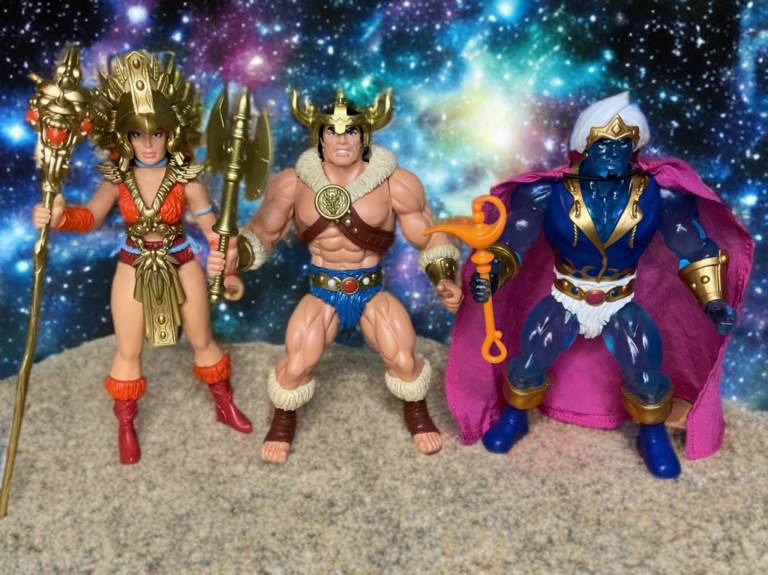
Formo Toys burst into the 5.5-inch action figure scene with Legends of Dragonore, a brand-new fantasy line that deliberately pays homage to the 1980s MOTU knock-off golden age while forging its own identity and shared mythos. Launched in the early 2020s (with Wave 1 debuting around 2022–2023 and revealed at conventions like Power-Con), the figures capture the classic crouched battle stance, oversized weapons, modular armor pieces, and generous accessory load-outs that snap directly onto vintage MOTU/Remco bodies or even modern MOTU Origins figures for perfect compatibility and endless army-building/customizing potential.
The line is produced with collector focus in mind: high-quality plastic, tight joints, 10 points of articulation (including ball-jointed shoulders/hips, swivel wrists/ankles, and more), removable armor/harnesses, soft-goods capes on select figures, and detailed sculpts that evoke 1980s toy aesthetics without being direct copies. Packaging mirrors vintage carded style—vibrant comic-book art on blister cards, character bios/backstories on the reverse, and the “5.5 inch action figure” branding—complete with promises of ongoing waves that build a cohesive Dragonore world of heroes, villains, dragons, and epic quests.
Core Concept and Mythos
Legends of Dragonore centers on a high-fantasy realm where warriors hunt dragons, battle dark magics, and seek powerful divine armors. Each wave advances the storyline: Wave 1 introduces the core cast and the first Divine Armor pieces (collect all to assemble the full set), later waves expand with new threats, army builders, and massive deluxe creatures like dragons.
Waves and Key Figures
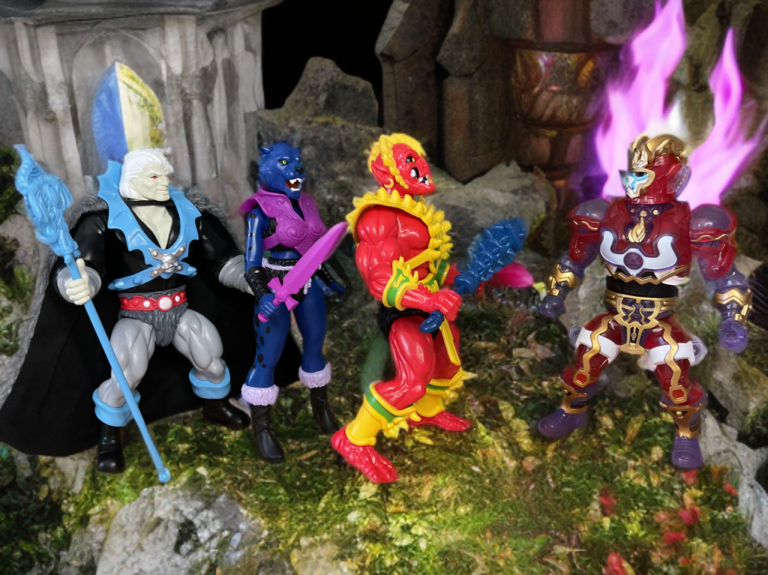
- Wave 1: The Beginning (6 figures, Early Bird kit available):
- Barbaro (Heroic Leader): Muscular barbarian warrior with axe/sword, harness, and heroic pose.
- Onitor (Hunter): Stealthy tracker with bow or blades, removable gear.
- Ka-Rem (often Fire Fury variant in later decos): Fierce fighter with flame-themed elements.
- Yondara: Agile warrior (female sculpt) with staff or sword.
- Oskuro the Evil Magician (main villain): Hooded sorcerer with removable harness, soft-goods cape, mystical staff; detailed evil design and 10 points of articulation.
- Pantera (often Night Hunter variant): Sleek, panther-like warrior with claws or weapons. Each includes one or more pieces of the First Divine Armor for set completion.
- Wave 1.5: Fire at Icemere (mid-wave bridge, 6 new deco/variant figures): Glacier Mission Barbaro, Dark Magic Apprentice Oskuro, Fire Fury Ka-Rem, Night Hunter Pantera, Raitor, and others—exciting recolors and thematic tweaks (e.g., icy or fiery palettes) without Divine Armor pieces, linking to Wave 2.
- Wave 2: Dragon Hunt (6 new figures + Army Builder 3-pack + Weapons Pack):
- Arboryous
- Venatica
- Horri-Dame
- Terreptor
- Chief (likely a leader figure)
- Additional hunter/warrior types, each with a piece of the Second Divine Armor (full set assemblable from the wave). Includes chained dragon hunter axes, removable headdresses/harnesses, and army-builder multiples for troop-building.
- Deluxe Creatures and Expansions: Massive dragons like Pyrant Lord of Desolation, Scorchwing (Mother of Dragons, unassembled in full-art box, configurable in two forms with swappable legs/arms for bipedal or quadrupedal poses), and more—around 25 cm scale, perfect mounts or bosses.
Collector Appeal and Legacy
Legends of Dragonore stands out as one of the strongest modern continuations of the 5.5-inch ecosystem—accessible retail pricing, strong articulation for dynamic poses, deep customization (parts interchange with vintage/Remco/Zoloworld), and an expanding lore that rewards completionists. It’s shown at major cons (Power-Con, Zolocon) with displays and pre-orders, and the quality has stunned collectors for seamless MOTU Origins integration. Future waves promise more dragons, warriors, and mythos growth.
Market Prices (approximate, based on formotoys.com retail, BigBadToyStore, eBay solds, and secondary markets)
- Individual new/MOC carded figures (e.g., Oskuro, Barbaro, Onitor from Wave 1/1.5): $30–$40 (retail often $29.99–$34.99; Amazon/eBay similar).
- Complete Wave sets (e.g., Wave 1 Early Bird kit of 6, Wave 1.5 Fire at Icemere set, Wave 2 Dragon Hunt complete set): $170–$250 (e.g., Wave 1 ~$169–$220, Wave 1.5 ~$225–$250, Wave 2 ~$209+).
- Deluxe dragons/creatures (e.g., Pyrant, Scorchwing): $85–$125+ (e.g., Scorchwing $85 + shipping).
- Army Builder 3-packs or Weapons Packs (Wave 2): $50–$80.
- Loose figures: $20–$40 (often $25–$35 complete with accessories).
- Convention exclusives/variants: Slight premiums ($40–$60+ if limited).
Formo Toys delivers what many collectors craved: fresh 1980s-inspired fantasy at modern quality and price points, with a living line that keeps growing. It’s an essential modern pillar for any 5.5-inch fantasy army.
7. Formo Toys Warriors of the Galaxy
Formo Toys’ Warriors of the Galaxy is the cosmic counterpart and sister line to Legends of Dragonore, expanding the company’s retro 5.5-inch ecosystem into space-fantasy territory while maintaining the same high-quality engineering, compatibility, and collector-focused design. Announced in early 2025 (with pre-orders starting around June 2025 for Wave 1 and further waves rolling out through 2025–2026), the line revives the spirit of 1980s Sungold Galaxy Warriors knock-offs—blending barbarian muscle, futuristic armor, alien warriors, and cosmic elements—without being direct reissues. Instead, it delivers fresh sculpts, modular parts, and an expanding mythos that ties into the broader Formo universe.
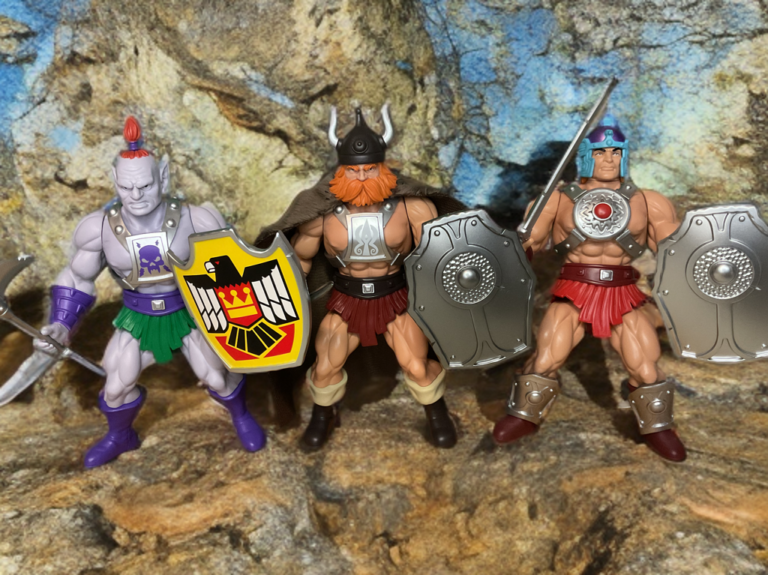
Like Dragonore, these figures use the classic 5.5-inch crouched battle stance, feature 10 points of articulation (ball-jointed shoulders/hips, swivel wrists/ankles, etc.), removable armor/harnesses/belts, soft-goods capes on select characters, and generous weapon/accessory load-outs that fully interchange with vintage MOTU, Remco lines, Zoloworld ROTU, Dragonore, and even MOTU Origins bodies. This flawless compatibility makes them ideal drop-in additions for mixed armies—imagine Sungold-style aliens battling alongside He-Man or Dragonore barbarians in epic crossovers.
Packaging echoes 1980s carded style with bold, retro artwork, individual character “Battle Strip” fold-out inserts detailing backstories, and the “5.5 inch action figure” branding. The line is positioned as an “expanding retro” series, with waves building a galactic invasion narrative led by warriors like Magnon, Baltard, and Huk.
Waves and Key Figures
- Wave 1 (launched ~2025, initially focusing on core heroes):
- Baltard: Brutish warrior with modular axe, shield, removable armor, and belt; a rugged, axe-wielding powerhouse evoking classic Galaxy Warriors brutes.
- Magnon: Sword-and-shield fighter with removable armor, belt, and shin guards; muscular and heroic, often highlighted for his dynamic pose and accessory variety.
- Huk: Cape-wearing leader figure with sword, shield, removable armor, belt, and flowing cape; a standout for his regal/cosmic barbarian aesthetic and excellent articulation. Wave 1 sets (e.g., Baltard + Magnon + Huk bundles) emphasize modular parts for customization.
- Wave 2 (pre-orders live August 2025, expanding the roster):
- Spikes™: Spiked-armor alien warrior with aggressive design, multiple modular parts (11 total), 10 points of articulation, and weapons like blades or spikes; a fan-favorite for his unique silhouette.
- YGG™ (or Ygg): Mysterious cosmic entity/warrior with intricate modular construction (11 parts), shield/sword options, and a more ethereal/alien vibe; perfect as a villainous or enigmatic addition.
Future waves (teased at events like Lucca Comics & Games 2025) include additional figures such as Anubi, Sun Hawk, Supra, and more, promising deeper galactic lore, army-builders, and potential vehicles or large-scale creatures.
Collector Appeal and Legacy
Warriors of the Galaxy quietly builds one of the strongest modern 5.5-inch ecosystems alongside Dragonore—affordable, high-articulation figures with deep retro nostalgia, seamless integration across lines, and ongoing releases that reward completionists. The space-fantasy blend (barbarian physiques + cosmic armor, alien heads, energy weapons) adds variety to MOTU/knock-off armies without feeling derivative. It’s shown strong convention presence (Power-Con, Lucca) and has earned praise in reviews (e.g., Pixel Dan unboxings) for quality and play value.
Market Prices (approximate, based on formotoys.com retail, BigBadToyStore, eBay solds, and secondary markets)
- Individual new/MOC carded figures (e.g., Baltard, Magnon, Huk from Wave 1; Spikes, YGG from Wave 2): $35–$38 (retail often $35.00–$37.99; pre-orders similar, slight upcharge for international shipping).
- Wave sets/bundles (e.g., Wave 1 Baltard + Magnon + Huk ~$105; Wave 2 Spikes + YGG full set ~$72): $70–$110 (bundled savings common).
- Loose figures: $20–$35 (often $25–$30 complete with accessories).
- Future/exclusive variants (teased but not yet released): Likely $35–$45 based on patterns.
Together with Legends of Dragonore, Formo Toys has created a vibrant, living 5.5-inch retro revival—accessible for new fans, customizable for veterans, and endlessly expandable. It’s the modern evolution of what started with 1980s knock-offs, proving the format still rules.
8. Sungold’s Galaxy Warriors (1983)
Sungold, a Hong Kong-based manufacturer, essentially laid the groundwork for the entire wave of high-quality Masters of the Universe knock-offs that followed. Released in 1983 amid the massive MOTU boom, Galaxy Warriors was the first major line of 5.5-inch fantasy/sci-fi figures that captured the muscular sculpts, dynamic poses, and play value of He-Man’s world while injecting a distinct mash-up flavor—barbarian warriors clashing with alien beasts, cosmic armor, and swords-and-sorcerers vibes. The figures featured soft rubber heads (for a more lifelike feel), open left hands (a key differentiator from the similar Sewco Galaxy Fighters, which had slightly closed fists), twisting waists, articulated arms/legs/neck, and incredibly generous accessory packs that included multiple weapons, shields, harnesses, and armor pieces—making them instantly addictive for play and army-building.

The line’s success was explosive: it spawned countless bootlegs (e.g., Muscle Warriors, Galaxy Heroes, Freedom Fighters), variants, international re-releases, and even later Sungold extensions like Galaxy Warrior: End of Time – The Last Battle (a 1990s revival with new characters, red-body armor sets, and “Combo Heroes” themes, often distributed by companies like Paradise Valley Toys). This extension pushed the “Galaxy Hole” concept further with updated packaging and accessories, proving the molds’ enduring appeal decades later.
Core Figures and Variants
Galaxy Warriors consisted of 12 main figures in Series 1 (1983), plus two later additions on “Swords & Sorcerers” style cardbacks:
- Magnon (heroic sword-and-shield fighter; variants include helmet color swaps or pale body tones).
- Spikes (spiked-armor brute).
- Triton (aquatic-themed warrior; variants with mustache paint apps).
- Tiger Man (feline humanoid with claws/fur details).
- Huk (cape-wearing leader type).
- Anubi (wolf-like or jackal-headed warrior; sometimes called Wolfman in bootlegs).
- Sahak (reptilian or snake-themed).
- Thor (hammer-wielding viking-esque figure).
- Baltard (bearded, rugged fighter; variants include white or clown-like paint apps in some bootlegs).
- Ygg (minotaur or bull-headed alien; often a standout for horned design).
- Dragoon (dragon-themed warrior).
- Dino Man (dinosaur-hybrid brute). Later “Swords & Sorcerers” additions:
- Deevil (demonic villain, sometimes removed early in certain markets due to name similarity concerns).
- Rahh (or Raah; fierce panther-shield bearer).
- Cross-listed inclusions like Sunhawk (from Galaxy Fighters line).
Many figures share sculpt elements or team affiliations (e.g., Deevil’s silver-shield team vs. Rahh’s black-panther team), with endless MOC variants from mixed accessory packs—different weapon/shield/harness combos on the same cardback.
Beasts and Riders
The play value skyrocketed with four “Fearful Beasts from the Planet Ferror”—large, rideable creatures packaged with random figures, their weapons, shields, and labeled for dramatic flair:
- Tiger (feline mount; known pairings with Baltard, Magnon, Triton).
- Dinosaur (reptilian beast; paired with Anubi).
- Mammoth (tusked giant).
- Horse (or Pegasaurus-like steed in some descriptions).
These beasts reused molds creatively and allowed mounted battles, much like MOTU’s Battle Cat or Panthor.
Accessories and Packaging
Figures came carded on vibrant “Swords & Sorcerers” blister cards with dramatic artwork showing epic clashes. Separate carded accessory packs included two weapons, a shield, and harness for extra customization. The beasts shipped in window boxes or bagged with riders.
Collector Appeal and Legacy
Galaxy Warriors remain the ultimate gateway for MOTU knock-off collectors: common enough loose to army-build affordably, yet mint-on-card (MOC) examples chase-worthy due to variants and scarcity in sealed form. Their endless compatibility—with MOTU, Remco, Sewco Galaxy Fighters, Zoloworld, Formo, and every 5.5-inch line—makes them backbone troops in mixed collections. The line’s influence is massive: it birthed generations of bootlegs and proved the 5.5-inch formula could sustain endless themes and knock-offs.
Market Prices (approximate, based on recent eBay sold/completed listings, Etsy, and collector markets)
- Loose common figures (e.g., Magnon, Spikes, Triton, Baltard, Huk): $15–$50 (often $20–$40 complete with basic weapons/shield; nicer condition or rare variants $40–$60+).
- Mid-tier or standout figures (e.g., Tiger Man, Anubi, Ygg, Dino Man): $30–$80 (complete with accessories higher).
- Rarer/later additions (e.g., Deevil, Rahh, Sunhawk cross-overs): $50–$150+ (scarcer due to limited release).
- Beasts/riders (e.g., Tiger or Dinosaur loose with figure): $50–$150 (complete mounted sets $80–$200+; boxed beasts rarer).
- Carded/MOC figures: $50–$200+ (common loose commons carded ~$50–$100; rarer like Deevil or variants $150–$300+ in good condition; high-end sealed pushing $200–$400+).
- Accessory packs or parts: $10–$30 standalone.
- Bootleg extensions (e.g., End of Time figures or red armor sets): $20–$120 (e.g., complete sets $80–$150).
Galaxy Warriors kicked off the knock-off explosion and still deliver unbeatable value and fun—common, compatible, and endlessly cool for any Eternia-adjacent army.
9. Galaxy Fighters (Sewco, 1984–1985)
Directly riding the wave of Sungold’s Galaxy Warriors success, Sewco (a Hong Kong manufacturer, sometimes theorized to be connected to or sourcing from Sungold due to mold similarities) launched Galaxy Fighters as a near-identical follow-up series in 1984, with distribution continuing into 1985. Distributed in the U.S. by companies like Madison and East West, the line flooded discount stores, toy aisles, and import sections across America—making it one of the most ubiquitous MOTU knock-offs of the mid-1980s. The figures were engineered for seamless 5.5-inch compatibility with Masters of the Universe, Remco lines, Sungold Galaxy Warriors, and virtually every other contemporary knock-off, allowing endless mixed-army chaos.
The key visual differentiator is the slightly closed left hand (versus Sungold’s open left hand), along with Sewco leg stamping (or no stamp on later releases) and distinct accessory sets. Many figures reuse or closely mimic Sungold molds and names but with tweaks: different head sculpts, paint apps, belt colors, harnesses, shields, weapons, and overall colorways that give the line a “fresh” feel despite the heavy overlap. Accessories were varied—four types of shields, two swords, two axes, two armor/harness styles—leading to countless MOC variants where the same figure body appears with mismatched gear from random accessory packs.
Core Figures and Variants
The line featured around 12 main figures (similar to Sungold’s core wave), with some renamed or redesigned to distance from direct copies while retaining the sci-fi/fantasy mash-up aesthetic:
- Daton (aka Magoon; Sungold Magnon equivalent, often with black hair and helmet variants in red or purple).
- Baltard (Sungold Baltard copy; bearded brute).
- Batoon (unique variant of Baltard—eye patch added, top knot removed for a new pirate-like look).
- Centurn (centaur-inspired warrior; sometimes listed as Centurion).
- Mace Ape (ape-like brute with mace weapons; one of the standout unique sculpts).
- Iguana (reptilian humanoid; fresh sculpt not directly from Sungold).
- Kobraa (aka Kobra; Sungold Sahak equivalent, snake-themed).
- Sunhawk (cross-over from Sungold, often included; bird or hawk warrior).
- Anobe (Sungold Anubi/Walph equivalent; wolf/jackal-headed).
- Walph (Sungold Anubi rename).
- Robic (robotic or armored variant).
Later or variant releases included minor paint differences (e.g., helmet colors on Daton, belt accents), and some figures appeared with no Sewco stamp on the leg due to production changes.
Beasts and Vehicles
Unlike Sungold’s multiple “Fearful Beasts from the Planet Ferror” (Tiger, Dinosaur, Mammoth, Horse), Galaxy Fighters introduced fewer but unique additions:
- Pegasaurus (winged horse-like mount).
- Horse (standard steed).
- Demon Fighter (demonic beast or vehicle hybrid).
- Castle of Doom (rare playset-like structure, possibly a boxed backdrop or fortress).
Beasts were released both with random rider figures and standalone, adding mounted battle play value similar to MOTU’s Battle Cat equivalents.
Packaging and Distribution
Cardbacks echoed Sungold’s dramatic “Swords & Sorcerers” style but with Galaxy Fighters branding, character art, and accessory callouts. The heavy U.S. importation via discount chains made loose figures extremely common in the 1980s, while carded examples are scarcer today due to play wear and low survival rates.
Collector Appeal and Legacy
Collectors prize Galaxy Fighters for the rewarding chase of subtle variations—different belt/head/weapon combos, name renames, and accessory mixes—that make completing both Sungold and Sewco lines a satisfying puzzle. The closed fist, unique additions like Mace Ape/Iguana/Batoon, and slightly different accessory palette give it a distinct identity despite the shared DNA. It’s a budget-friendly army-builder line (cheaper loose than many Remco entries) with flawless crossover potential—perfect for bulking up Eternian forces with cosmic barbarians or alien troops.
Market Prices (approximate, based on eBay sold/completed listings, Etsy, and collector markets)
- Loose common figures (e.g., Daton/Magoon, Baltard, Centurn, Sunhawk): $15–$50 (often $20–$40 complete with weapons/shield; basic played-with examples $10–$25).
- Mid-tier or unique sculpts (e.g., Mace Ape, Iguana, Kobraa, Batoon): $30–$80 (complete with accessories higher; nicer paint/condition pushes $50–$70+).
- Rarer variants (e.g., helmet color swaps on Daton, no-stamp leg releases): $50–$120+.
- Beasts/vehicles (e.g., Pegasaurus or Demon Fighter loose): $40–$150 (complete with rider $80–$200+; Castle of Doom rarer and higher if found).
- Carded/MOC figures: $50–$200+ (common loose figures carded ~$50–$100; scarcer like Mace Ape or Batoon MOC $100–$250+ in good condition; high-end sealed or variants $150–$300+).
- Accessory packs or parts: $10–$30 standalone.
Galaxy Fighters is the “sequel knock-off” that refined Sungold’s blueprint—ubiquitous in its day, endlessly compatible, and a rewarding hunt for variant completists today.
10. Speclatron (S&T Sales, 1983–1984)
Speclatron stands alone among 1980s MOTU knock-offs for its unforgettable, one-of-a-kind gimmick: every figure features a clear plastic torso filled with water and multicolored glitter (or sparkles). A small hole in the back allows you to press and shake the figure, causing the glitter to swirl dramatically inside—”magic action” that the packaging described as making the character “powergized, invincible, ready for action.” This liquid-filled “snow globe” torso, combined with the classic 5.5-inch muscle-bound frame (crouched battle stance, twisting waist, ball-jointed limbs, grip hands), created figures that looked like nothing else on the shelf—ethereal, glowing aliens straight out of a cosmic fantasy battle.
Manufactured by S&T Sales (a lesser-known Hong Kong/U.S. distributor), the line positioned the characters as extraterrestrial warriors from outer space locked in an eternal struggle for universal control. The sci-fi/alien theme differentiated it from pure fantasy knock-offs like Remco or Sungold, while the gimmick made it instantly memorable (and notoriously fragile—many surviving examples have leaked, discolored, or lost glitter over time).
Core Figures
Only six figures were produced and carded, split into good guys and bad guys:
- Good Guys (heroes):
- Hero (standard muscular champion, often with heroic paint apps).
- Kandarr (or Kandar; armored warrior with shield and sword, sometimes listed as a leader type).
- Bad Guys (villains):
- Dethlor (the undisputed Skeletor homage—skull-faced head, hooded or bare-skull design, dark armor; the line’s holy grail due to extreme rarity).
- Adak (demonic or monstrous villain with aggressive sculpt).
- Deemin (or Demon; horned or spiked evil figure).
- Venum (or Venom/Venum; snake-themed or poisonous alien with fangs/details).
Some sources mention additional or variant names (e.g., Devilcat as a silver variant beast or figure), but the confirmed carded lineup is these six. Accessories were simple but thematic: shields (silver for Dethlor, often blue variants noted), swords, and sometimes belts or capes—generous for the era but secondary to the torso gimmick.
Flexatron Connection
Flexatron is widely regarded as a related successor or re-release line from the same S&T Sales stable (or closely affiliated producers), using similar clear-torso engineering but with updated or rebranded figures. Flexatron included characters like Zorn, Vipen (or Viper), Herr Bone (skeletal variants), and others—some sharing molds or gimmick elements with Speclatron. Collectors often group them together as “Speclatron/Flexatron” due to overlapping production, body types, and rarity. Flexatron figures sometimes appear in Brazilian, Mexican, or Spanish markets, suggesting international variants or knock-offs of the original gimmick. The two lines are so intertwined that loose parts (e.g., weapons, heads) are frequently cross-listed or used interchangeably in customs and restorations.
Collector Appeal and Legacy
Speclatron’s rarity stems from limited production, fragile gimmick (leaks common), and low survival rate—making complete, intact examples exceptionally scarce. The translucent “powerized” bodies give them a unique visual pop in any 5.5-inch display, and the Skeletor-like Dethlor has become legendary in KO collecting circles. It’s the ultimate chase line: affordable in theory for commons (if found), but grail-level for Dethlor or mint sets. The gimmick’s novelty keeps it beloved in collector communities (e.g., YouTube deep dives like Black Tub Bootlegs episodes highlight its cult status).
Market Prices (approximate, based on eBay sold/completed listings, collector forums, and secondary markets)
- Loose common figures (e.g., Hero, Kandarr, Adak, Deemin, Venum): $300–$800+ (often $400–$600 complete with shield/weapon; played-with or leaked examples dip to $200–$400, but intact glitter torso pushes higher).
- Dethlor loose: $800–$2,000+ (complete with silver shield and accessories routinely $1,000–$1,500+; head-only or parts $100–$400; recent sales include full loose Dethlor around $1,100–$1,200, with variants like blue shield accessories $200–$500 standalone).
- Carded/MOC figures: $750–$2,500+ (any carded example rare; Dethlor carded or sealed pushes $1,500–$3,000+ or higher in top condition; commons like Venum NOS/new old stock ~$700–$900).
- Flexatron-related figures (e.g., Zorn, Vipen loose): $200–$600 (similar rarity; complete sets or variants higher).
- Accessories/parts (e.g., Dethlor silver shield): $100–$300 standalone (high demand for restorations).
Speclatron remains one of the most unique and coveted MOTU knock-offs—fragile, flashy, and fiercely rare. Finding a complete, non-leaky Dethlor is the pinnacle for many KO hunters, and the line’s “nothing else like it” appeal ensures it holds legendary status in the 5.5-inch world.
11. Funko’s Savage World & Related 5.5-Inch Lines (2017–present)
Funko revived the classic 5.5-inch barbarian action figure scale in the late 2010s, launching a series of retro-styled lines that deliberately evoke the look, feel, and play value of 1983-era MOTU and knock-offs. These figures feature the iconic crouched battle stance, muscular builds, generous accessories (weapons, armor, shields), limited but functional articulation (typically 5–7 points, focusing on shoulders, hips, waist twist, and head/neck), and full backward compatibility with vintage MOTU, Remco, Sungold/Sewco, Zoloworld, and Formo bodies—making them seamless drop-ins for mixed armies or customs. Packaging uses blister cards with bold, nostalgic artwork and bios that lean into fantasy/barbarian themes.
The Savage World umbrella brand debuted in late 2017/early 2018 as Funko’s entry into fully articulated 5.5-inch figures (distinct from their smaller POP! Vinyls), starting with licensed properties reimagined in a brutal, sword-and-sorcery style. Funko positioned these as “what if” retro lines that could have existed alongside He-Man in the 1980s, complete with playsets and chase variants.
Key Sub-Lines and Releases
DC Primal Age (2018–2019) This exclusive-to-Amazon line reimagined DC Comics heroes and villains as muscle-bound barbarians in a savage, prehistoric world. It launched with a brilliant marketing campaign via Pixel Dan, teasing it as a “lost 1983 toy line” before revealing it as new. Waves built a loose mythos (expanded in a 2019 DC one-shot comic), with figures featuring removable armor, weapons, and accessories that snap onto any 5.5-inch body.
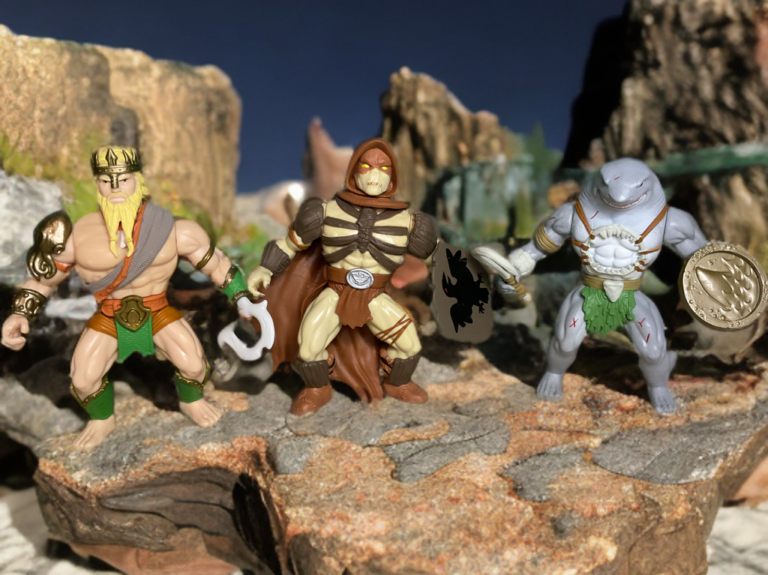
Wave 1 (2018): Batman (standard and black/gray variants), Aquaman, The Flash, Wonder Woman, Scarecrow, Mr. Freeze, Black Manta, Bizarro, Lex Luthor, King Shark, and the Batcave playset (a rocky lair with accessories). Wave 2 (2019): Superman, The Flash (additional deco), Lex Luthor (new variants), Green Lantern (with axe), and more. Wave 3: Krypto (the dog companion), additional Superman/Bizarro variants, and stragglers like Joker (sometimes cross-listed). Standouts include Batman as a fur-clad warrior and Bizarro as a monstrous brute—perfect for crossover battles with MOTU villains.
Savage World Horror Icons (2018–2019) Horror legends reimagined as 5.5-inch barbarians:
- Freddy Krueger, Jason Voorhees, Michael Myers, Leatherface, Pinhead (from Hellraiser). These came loaded with signature weapons (glove, machete, knife, chainsaw, pins) and detailed sculpts—great for dark army additions or display.
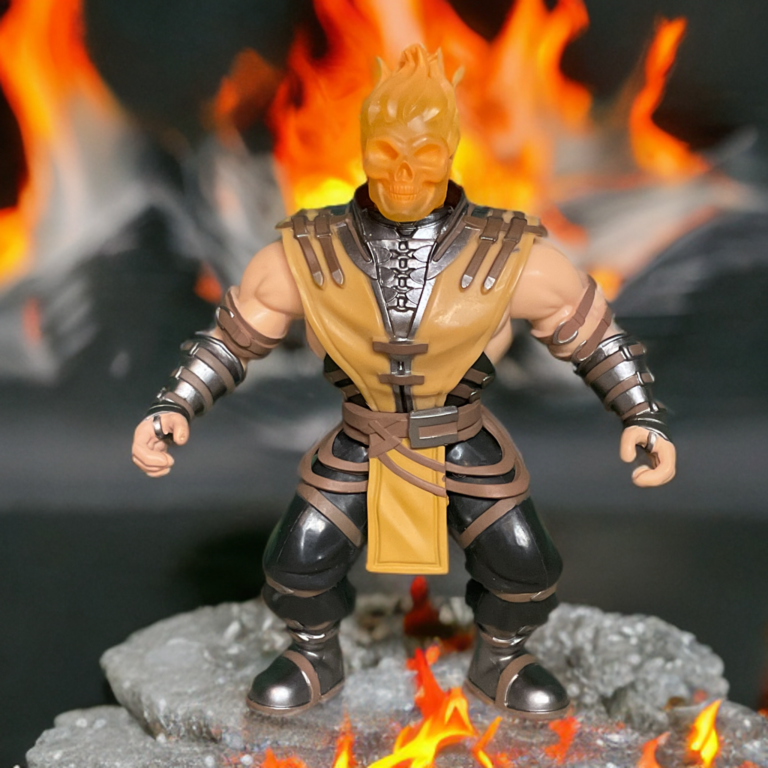
Savage World Mortal Kombat X (2017–2018 debut wave) The line’s initial focus and most relevant to MOTU scale: fully articulated fighters with character-specific gear.
- Scorpion (including translucent “spectral” chase variant), Sub-Zero (translucent ice chase), Liu Kang, Raiden, Kitana. Accessories include kunai, ice blades, hats, fans, lightning effects—ideal for posing epic fights or mixing with Eternian warriors (e.g., Sub-Zero vs. Skeletor).
Savage World ThunderCats (2018–2019) ThunderCats characters styled in barbarian mode:
- Lion-O (with Sword of Omens), Panthro, Slithe (villain), Mumm-Ra (demon priest), Jackalman, and others across waves. These blend cat-like features with muscle-bound poses and weapons, adding feline warriors to mixed collections.
Collector Appeal and Legacy
Funko’s Savage World lines prove the 5.5-inch format’s timeless appeal—modern production quality (clean sculpts, vibrant paints), affordable pricing, and perfect scale compatibility keep them popular for play, customs, and army-building. While articulation is simpler than today’s figures (no double-jointed knees), the retro charm and crossover potential (e.g., Primal Age Batman charging alongside He-Man, or Savage World Scorpion facing off against Remco Conan) make them instant favorites. The lines were short-lived in active production but remain widely available secondary market, with chase variants (translucent, glow, limited paints) adding hunt value.
Market Prices (approximate, based on eBay sold/completed listings, Amazon remnants, and collector markets)
- Individual new/MOC or loose figures (e.g., DC Primal Age Batman/Aquaman, MK Scorpion/Sub-Zero, Horror Michael Myers, ThunderCats Lion-O): $10–$30 (often $15–$25 loose complete; retail originals were ~$10–$15, now secondary similar or slight premium for chases).
- Chase/translucent variants (e.g., MK Sub-Zero ice or Scorpion spectral): $20–$50 (rarer chases $30–$60+).
- Playsets (e.g., DC Primal Age Batcave): $40–$80 (complete with accessories higher).
- Complete wave sets or lots (e.g., MK X series of 5 + chases): $50–$150.
- Loose commons: $8–$20 (great for army-building or parts).
Funko’s Savage World lines bridge vintage nostalgia and modern accessibility, expanding the 5.5-inch universe with licensed crossovers that feel right at home in any Eternian battlefield.
The 5.5-inch action figure universe keeps growing. Remco defined the gold standard in the 1980s, Sungold and its copycats saturated the market with bootlegs that became cherished classics, Speclatron delivered a wild gimmick collectors still pursue, and Funko’s retro revivals show the scale’s enduring power. From hunting ultra-rares like Dethlor to army-building with Galaxy Warriors or pitting Primal Age Batman against Savage World Sub-Zero, these lines capture the pure joy Mattel sparked in 1982: endless, poseable, muscle-bound fantasy warfare. The kings still reign.
Conclusion
The 5.5-inch action figure universe—born from Masters of the Universe’s explosive 1982 debut—has proven remarkably resilient and endlessly inventive. What began as a single Mattel line quickly spawned a parallel world of knock-offs and inspired successors that borrowed the muscular sculpts, battle-ready poses, generous accessories, and imaginative fantasy scale while adding their own twists: Remco’s licensed depth and monster mash-ups, Sungold and Sewco’s affordable army-building floods, Speclatron’s glittering gimmick, Zoloworld’s faithful modern revival, Formo Toys’ fresh mythos-building waves, and Funko’s licensed crossover barbarians that feel ripped from a lost 1983 catalog.
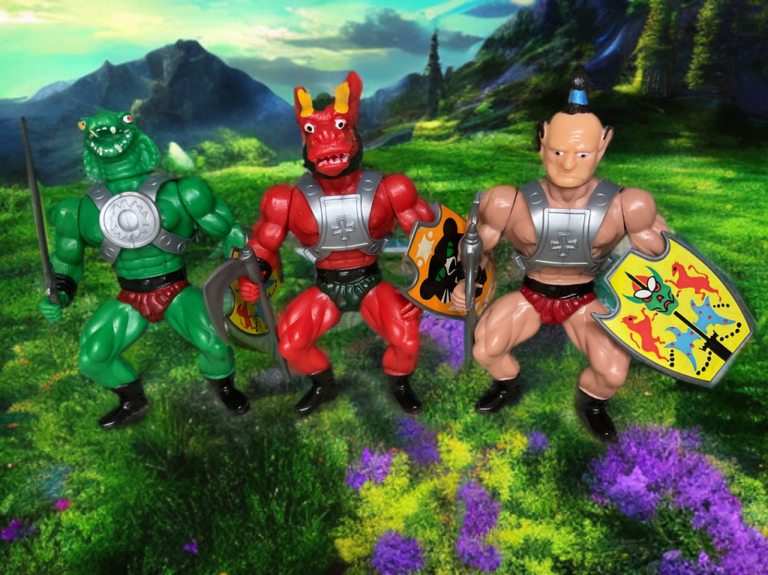
These lines weren’t just imitations; they expanded Eternia’s borders. Remco’s Warrior Beasts, Lost World, Conan, and Pirates of the Galaxseas set the quality benchmark with seamless compatibility and creative mold reuse. Sungold Galaxy Warriors and Sewco Galaxy Fighters became the people’s champions—common, chaotic, and perfect for bulk armies. Rarities like Speclatron Dethlor turned collecting into a treasure hunt, while modern torchbearers like Zoloworld Realm of the Underworld and Formo’s Dragonore/Warriors of the Galaxy keep the flame alive with updated articulation, limited editions, and ongoing lore.
Even Funko’s Savage World lines—reimagining DC, horror icons, Mortal Kombat, and ThunderCats in barbarian form—demonstrate the format’s timeless draw: poseable, mix-and-match muscle warriors ready for any battlefield.
Decades later, the appeal endures because the 5.5-inch scale delivers pure, unpretentious joy—endless customization, crossover chaos, and the thrill of building your own epic saga. Whether you’re army-building with Galaxy Warrior variants, hunting grails like a mint Dethlor, customizing with Zoloworld glow parts, or pitting Primal Age Batman against Savage World Sub-Zero, these figures capture the same raw excitement Mattel ignited in 1982.
The knock-offs didn’t just copy the Universe—they multiplied it. And in collections worldwide, the kings still reign supreme.